

Swish's revenue jumps 10-fold but 10-minute delivery costs mount
- Quick food startup faces high costs
- Revenue spikes as city footprint grows
- Expenses outpace the rising income
The story
Quick food startup faces high costs
Swish hit nearly ₹50 crore in revenue during its first full year, but its net loss grew 4 times larger to ₹91.1 crore.
Revenue spikes as city footprint grows
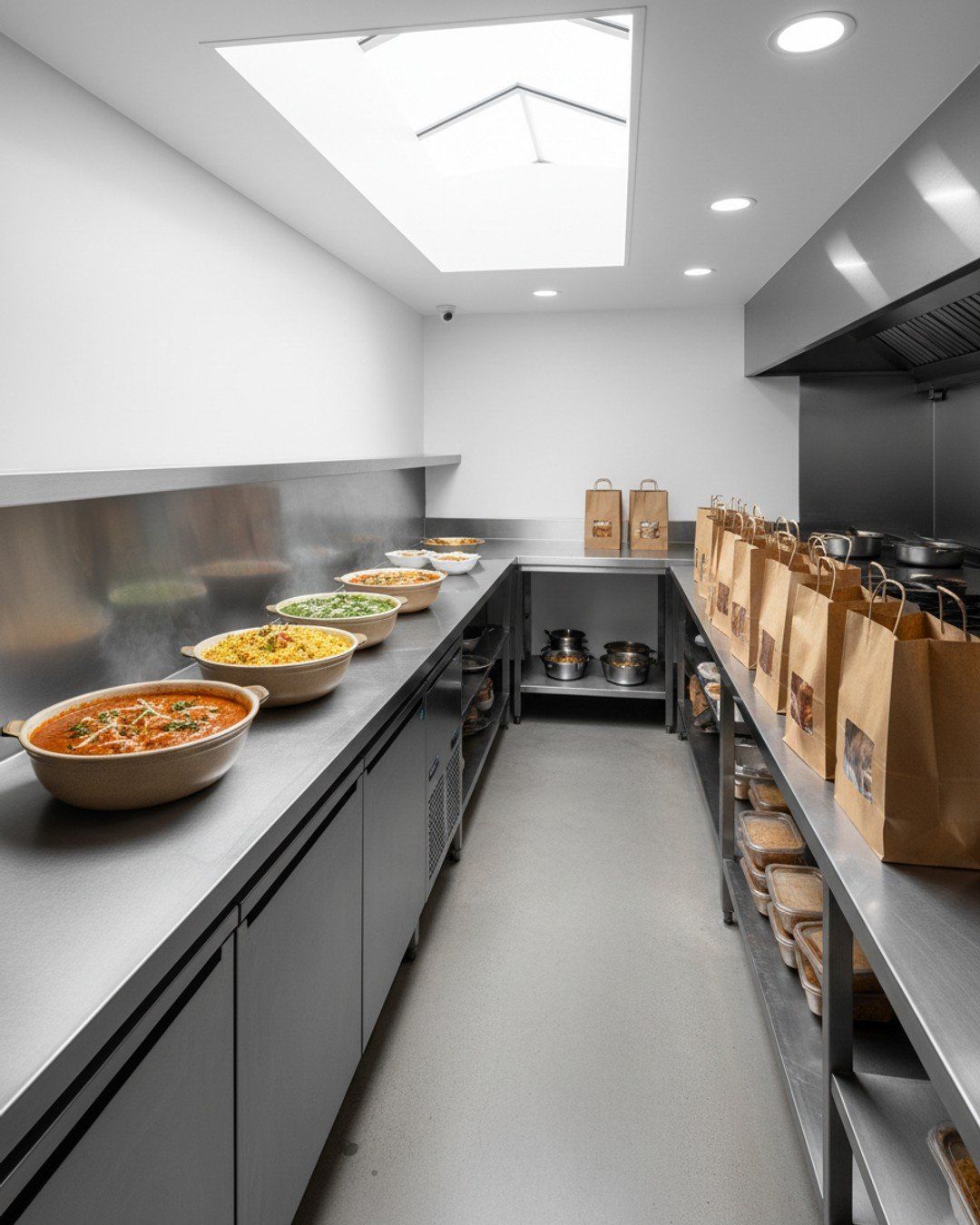
Operating revenue for the Bengaluru-based company surged more than 10-fold to ₹47.6 crore. This growth followed an expansion across Delhi, Gurugram, Noida, and Ghaziabad. Unlike major rivals, Swish controls its own kitchens and delivery staff to ensure food arrives in just 10 to 15 minutes.
Expenses outpace the rising income
Total spending jumped 5 times over to ₹144.8 crore, significantly faster than the startup's income growth. Employee benefits were the largest drain at ₹55.71 crore. The cost of goods sold and general operating expenses also increased by more than 500% as the firm scaled its kitchen network.
$62 million for kitchens
Swish raised $38 million in March and $24 million in September from investors like Accel to build 1,000 neighbourhood kitchens.
Testing third party restaurant orders
Swish is now moving beyond its own kitchens with a pilot called Swish Go. The service allows customers to order from outside restaurants and cloud kitchens. This marks a shift from its original fully-integrated model, aiming for affordable delivery without the typical packaging and platform fees.
Rivals pull back
Swiggy shut its 10-minute food apps over costs, but Swish is sticking with ultra-fast delivery as others exit.
Quick food delivery startup Swish reported a surge in revenue for the 2025-26 fiscal year, reaching nearly ₹50 crore. However, the Bengaluru-based company saw its net loss widen to ₹91.1 crore as heavy operational costs outweighed its growth. Operating revenue jumped 10-fold year-on-year, though the previous period only covered a partial year of operations.
Founded in 2024, Swish manages its own neighborhood kitchens and last-mile delivery to ensure meals reach customers in 10 to 15 minutes. This model is more asset-heavy than the platforms used by Zomato or Swiggy. Total expenses for the year grew 5 times to ₹144.8 crore, driven largely by staff costs and the price of materials for its expanding kitchen network.
To fund this expansion, Swish raised $62 million in 2026 through two major funding rounds. These investments from firms like Accel and Bertelsmann India are intended to help the company reach a goal of 1,000 kitchens. Currently, the service operates across 50 pincodes in major Indian hubs like Delhi and Bengaluru.
In a shift from its core strategy, the company is now piloting Swish Go. This new feature allows users to order from third-party restaurants rather than just Swish-owned kitchens. This experiment comes as other delivery giants scale back their ultra-fast efforts due to the high cost of maintaining speed at scale.
Source: Inc42 Media ↗

Photo: User:Jgera5, CC0
Photo: SerChevalerie, CC0
Illustration: AI-generated
Links in this story

How does this story make you feel?
Read next
 StartupsAn Indian startup's 30,000-step trek to conquer the US childcare market
 StartupsA new wave of Indian startups is using AI and hemp to fix daily life
 StartupsBewakoof founder launches AI tool to hunt for the web's best deals
 StartupsA new Indian AI startup is making $80 million a month helping labs train models
Comments