

US Army detonates 5 tons of toxic explosives in Iowa
- Army detonates toxic ticking time bomb
- Old barrels turned deadly
- Massive barriers block lead
By the numbers
- 10,000 lb
- Weight of explosivesTotal amount of lead azide destroyed in the blast
- 15 years
- Time in storageHow long the barrels sat before becoming unstable
The story
Army detonates toxic ticking time bomb
The US Army successfully blew up 10,000 pounds of unstable chemicals in Iowa after air monitors confirmed zero lead was released into the atmosphere.
Old barrels turned deadly
The 68 barrels of lead azide had been stored at the Iowa Army Ammunition Plant since 2009. Over 15 years, the material underwent "recrystallization," forming large and volatile crystals.
This chemical state is so sensitive that friction, vibration, or even dropping temperatures could have triggered a spontaneous and catastrophic explosion.
Massive barriers block lead
To prevent a toxic plume, the Army built elaborate defenses around the bunkers.
Precision blast hits target
At 9 a.m. on Wednesday, the Army triggered the controlled detonation in Middletown. Livestream footage showed loud pops followed by a faint cloud of smoke rising above the facility.
Major General Eric P. Shirley reported the mission was "100% as planned," and FEMA soon issued an all-clear for the surrounding area.
EPA confirms clean air
The Environmental Protection Agency placed sensors across the region to watch for lead dust.
Court allowed the explosion
Environmental groups initially sued to stop the blast, fearing lead would poison local farmlands. A court briefly blocked the plan before lifting the stay on Monday.
Judges decided that while the detonation carried risks, the danger of the chemicals blowing up on their own was a much greater threat to the public.
On Wednesday, November 25, 2026, the U.S. Army successfully detonated a dangerous stockpile of nearly 10,000 pounds of degraded lead azide at the Iowa Army Ammunition Plant in Middletown. Officials declared the 5-ton operation a "huge success" after initial monitoring by the Environmental Protection Agency (EPA) showed zero detectable airborne lead in the region. The cache had been in storage since 2009, but during a routine inspection in March 2026, experts discovered the chemicals had become increasingly volatile and prone to spontaneous detonation.
This operation matters because it successfully neutralizes a significant public safety threat that could have caused an environmental disaster for residents in the Midwest. Had the 68 barrels exploded without these specialized defenses, a massive plume of toxic lead dust could have poisoned agricultural lands and water supplies across southeastern Iowa and northeastern Missouri. By proving these mitigation techniques work, the military provides a blueprint for handling similar aging munitions stockpiles elsewhere in the country.
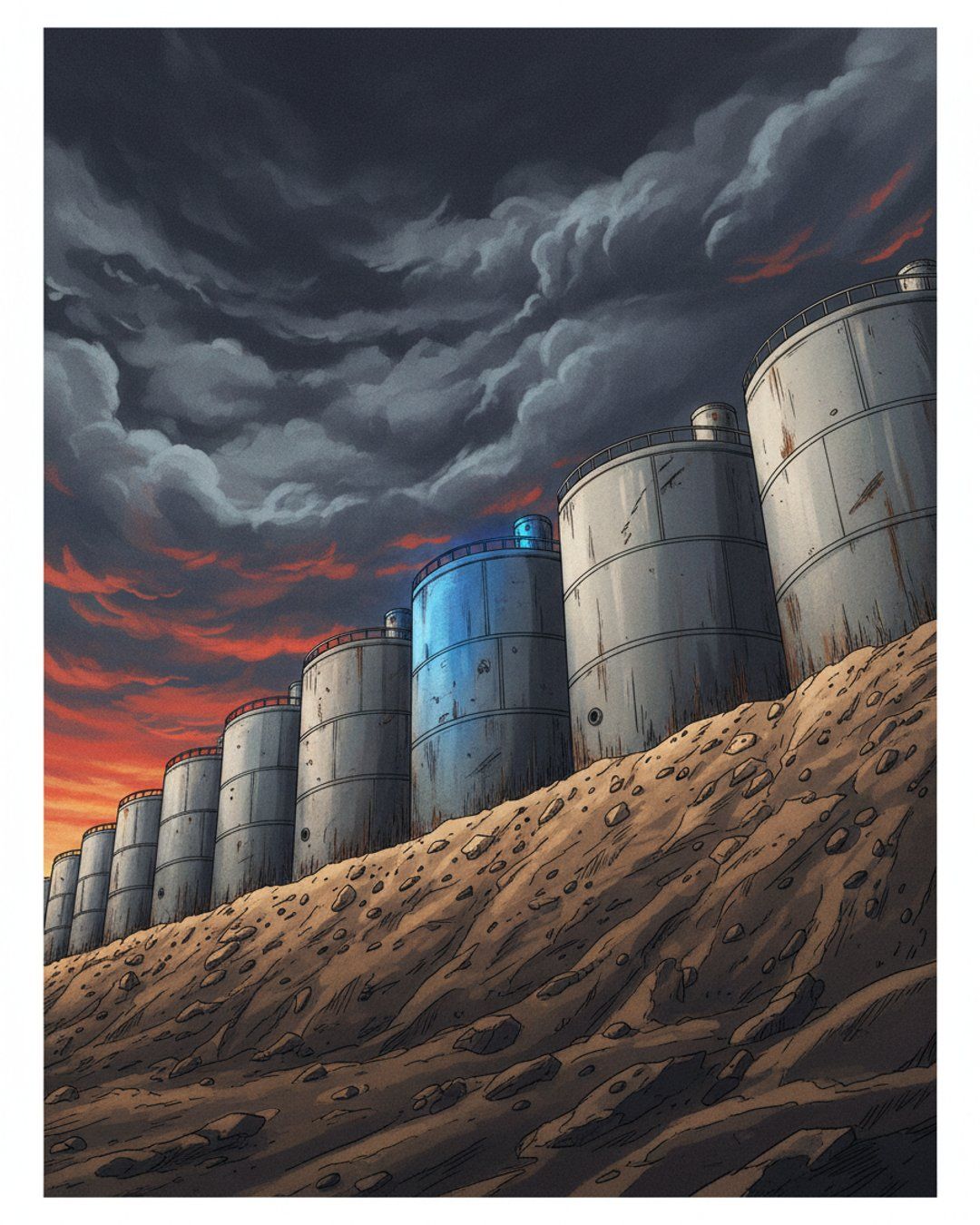
To ensure safety, the Army employed a "whole of government" approach involving FEMA and the Department of Health and Human Services. Experts from the 71st Ordnance Group used 3,600 gallons of specialized aqueous foam, earthen barriers, and 16,000-gallon water tanks to suppress the release of lead dust. The engineering goal was to force the thermal energy of the 10,000-pound blast into the ground rather than letting toxic particles escape into the atmosphere.
While the initial readings were positive, environmental groups are still calling for a full investigation into how the explosives were allowed to reach such a critical state of decay over 15 years. Experts warned that the material had recrystallized, making it sensitive to even minor vibrations. With winter approaching, officials argued that falling temperatures would have made the lead azide even more unstable, leaving a controlled blast as the only responsible way to prevent an accidental catastrophe.
Source: FOX 9 Minneapolis-St. Paul, CBS News, denvergazette.com ↗

Photo: The United States Army Band, Public domain
Illustration: AI-generated
Source: FOX 9 Minneapolis-St. Paul
Links in this story


 @TimesJetNewsThis story as 7 swipeable cards1/7US Army detonates 5 tons of toxic explosives in Iowa2/7Chemical dangerOld barrels turned deadly3/7




Comments