
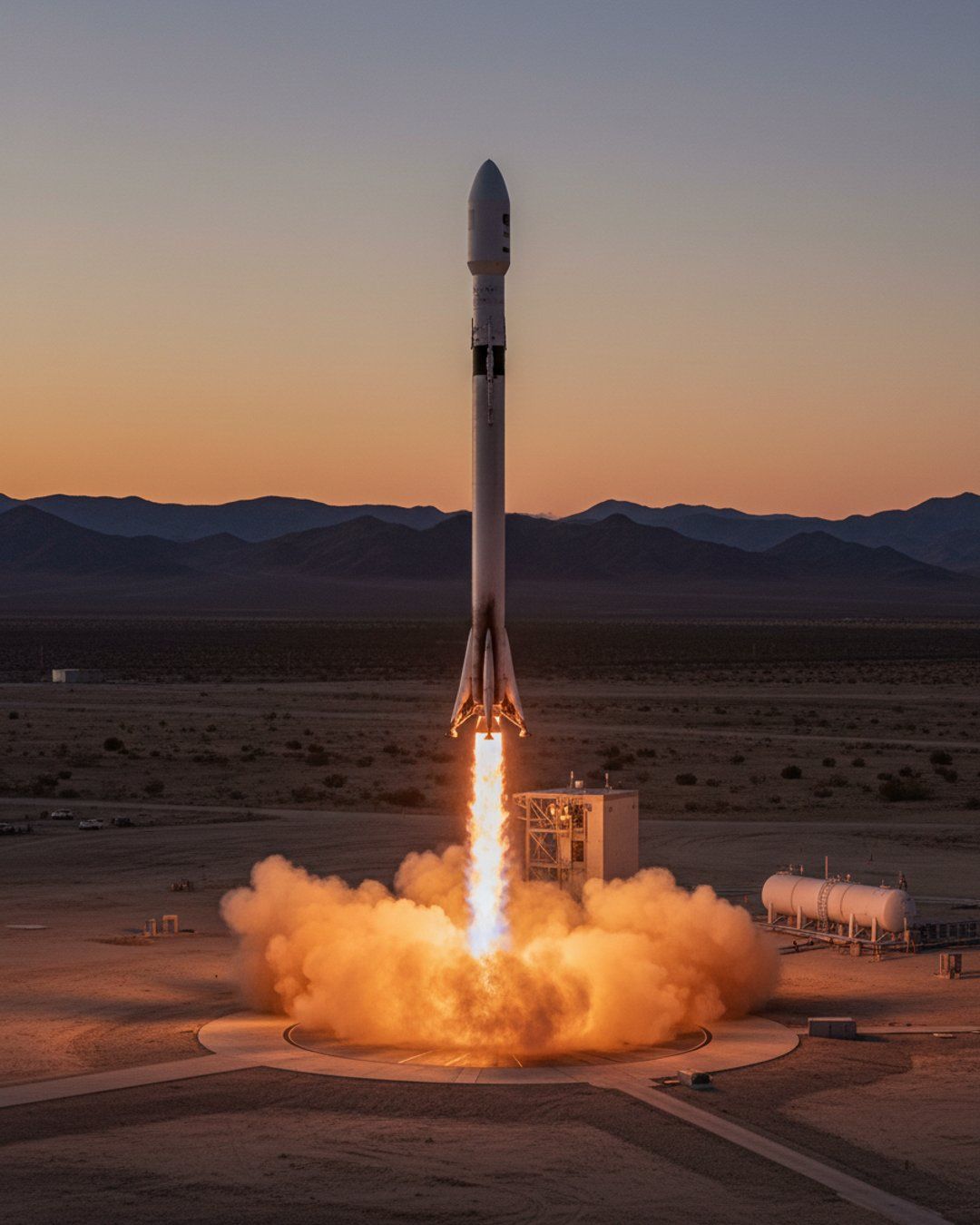
How Blue Origin beat SpaceX to the first vertical rocket landing
- The day space travel changed
- Ending the single-use era
- Beating its biggest rival
The story
The day space travel changed
On Nov. 23, 2015, Blue Origin's New Shepard rocket made the first-ever successful vertical landing from space.
Ending the single-use era
Before this flight, all rockets were discarded after a single launch. Blue Origin proved that boosters could return to Earth intact.
After sending its capsule toward space, the rocket plummeted back, reignited its engine to slow down, and touched down softly on a landing pad.
Beating its biggest rival
While SpaceX is now famous for its landing boosters, Blue Origin achieved a vertical landing first.
Dozens of successful flights
- 38 missions flown by New Shepard since 2015
- 17 flights carried human astronauts
- 21 uncrewed research missions completed
- 1 booster lost due to a technical issue
Scaling up for orbit
The success of the small New Shepard led to the massive New Glenn orbital rocket.
The mission shifts to the Moon
In 2026, Blue Origin paused New Shepard flights for 2 years to focus on lunar lander projects.
However, the landing technology remains core to the company. They are currently developing the Northstar engine to make their orbital landings even more efficient.
On Nov. 23, 2015, the space industry witnessed a breakthrough that ended the era of single-use rockets. Blue Origin successfully landed its suborbital New Shepard rocket vertically on a landing pad. While SpaceX is now well-known for landing Falcon 9 boosters, Blue Origin was actually the first to stick the landing from space.
The mission proved that rocket boosters could be recovered and reused, drastically reducing waste and costs. After releasing its capsule, the booster fell back to Earth, used its engine to brake, and touched down softly. This milestone kicked off a new standard for rocket design that continues today.
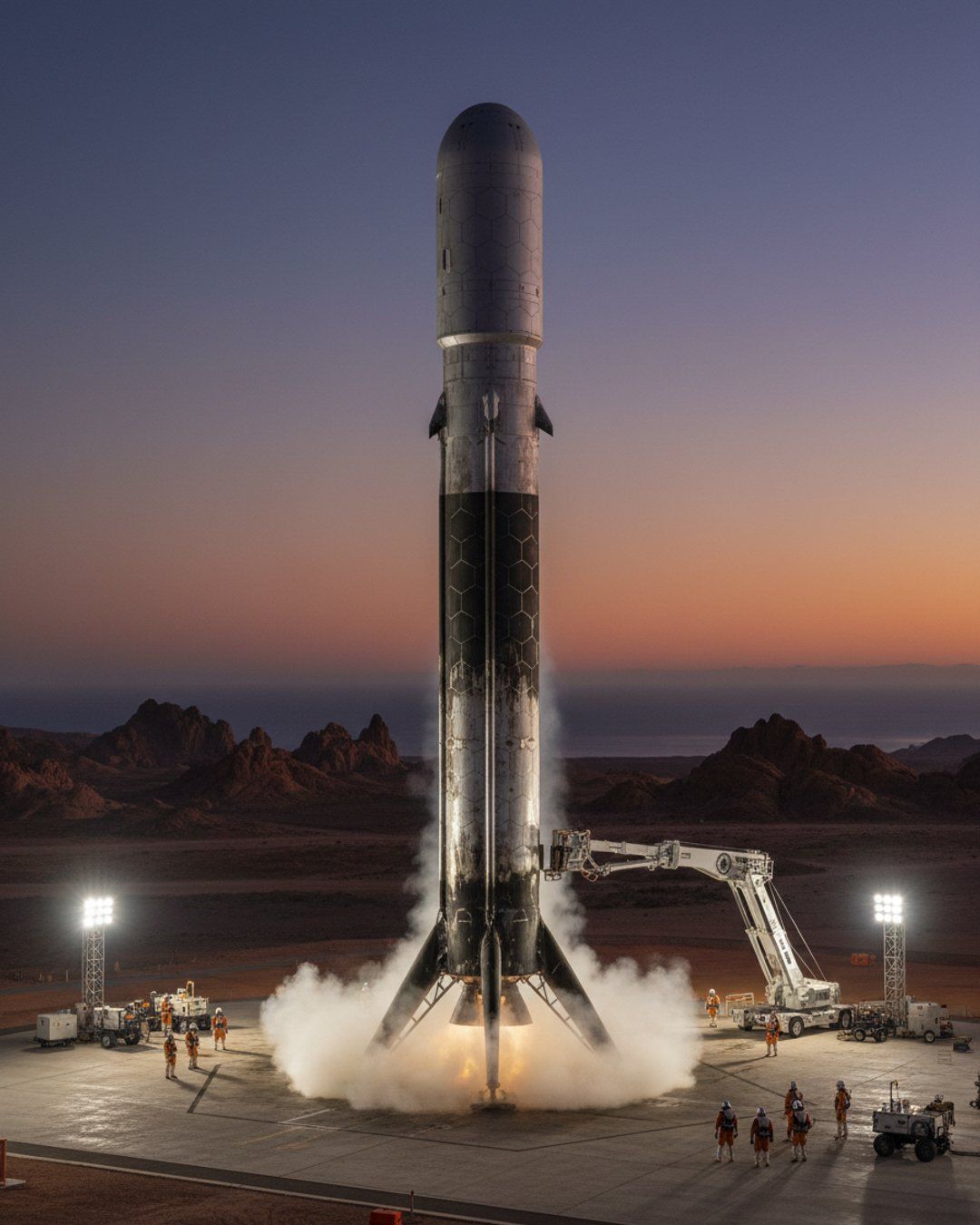
Since that first success, the New Shepard program has completed 38 missions. These include 17 flights that carried humans and 21 uncrewed missions. The company reused its boosters repeatedly, proving the durability of the technology despite losing one booster during a launch failure.
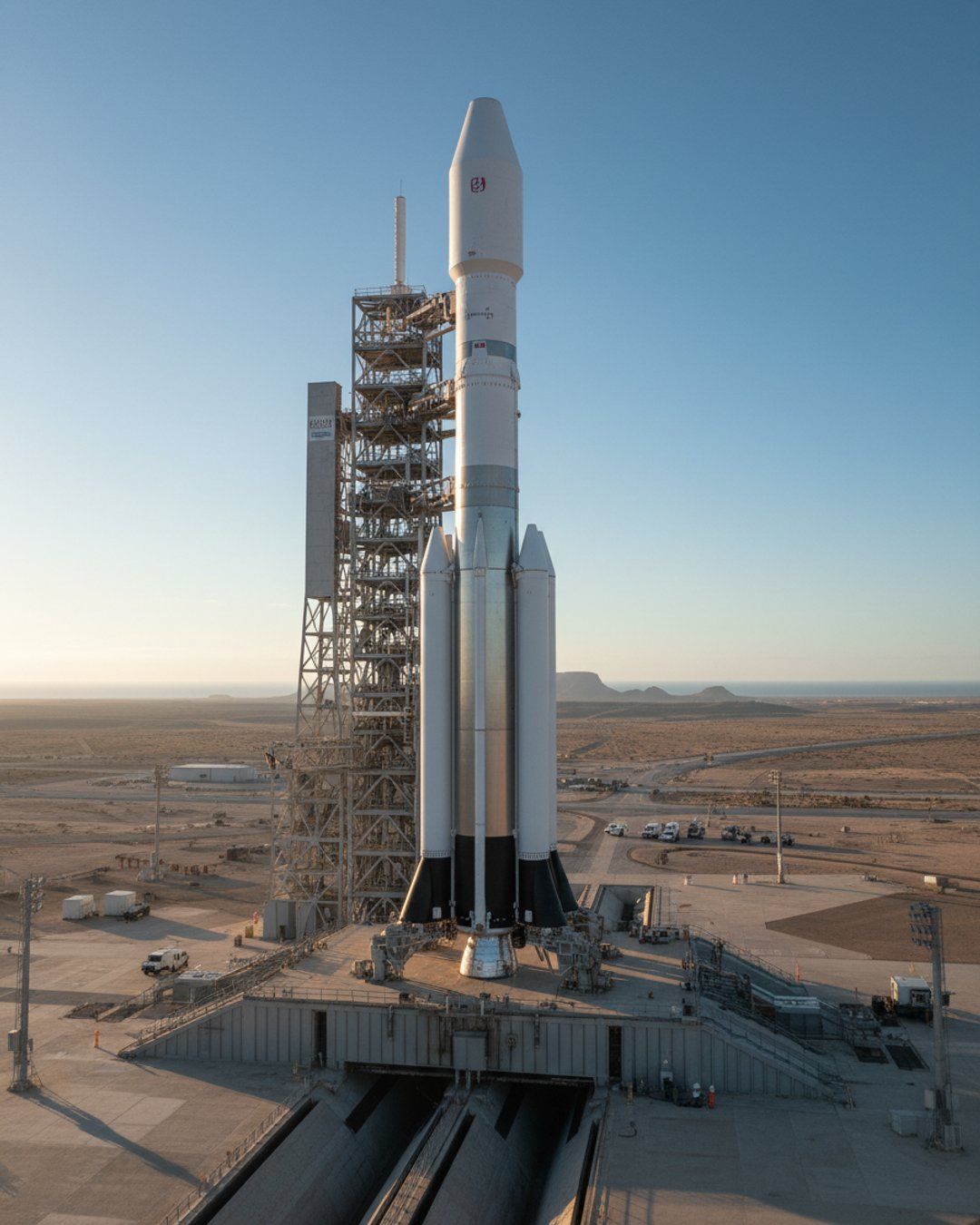
Blue Origin has since scaled this technology for its massive New Glenn orbital rocket, which made its first successful landing in 2025. Although the company recently paused New Shepard flights to focus on moon lander projects, the legacy of that first 2015 landing remains the foundation of its modern fleet.
Source: Space ↗
Illustration: AI-generated



Comments