Skip to content
TimesJetHomeExploreNotificationsSavedProfileYou
Reading as a guestSaves stay on this device. Sign in to like, comment and follow topics.
Ask AI about today's news

Latest

1MST3K revives the legendary 'Turkey Day' marathon for 2026Games2Suzlon and Persistent Systems hit by separate cyberattacksBusiness3Michelle Yeoh leads Blade Runner's 2099 cyberpunk returnSpace4West Bengal seeks a new name to honor its 1947 partition historyTrending5Scotland's £19 billion food sector faces a freezing crisis over net-zero costsScience

Topics

Tech
Startups
Business
Health
Trending
Space
Science
Games

© 2026 TimesJet

Skip to content
#astronomy
#

#astronomy

4 stories

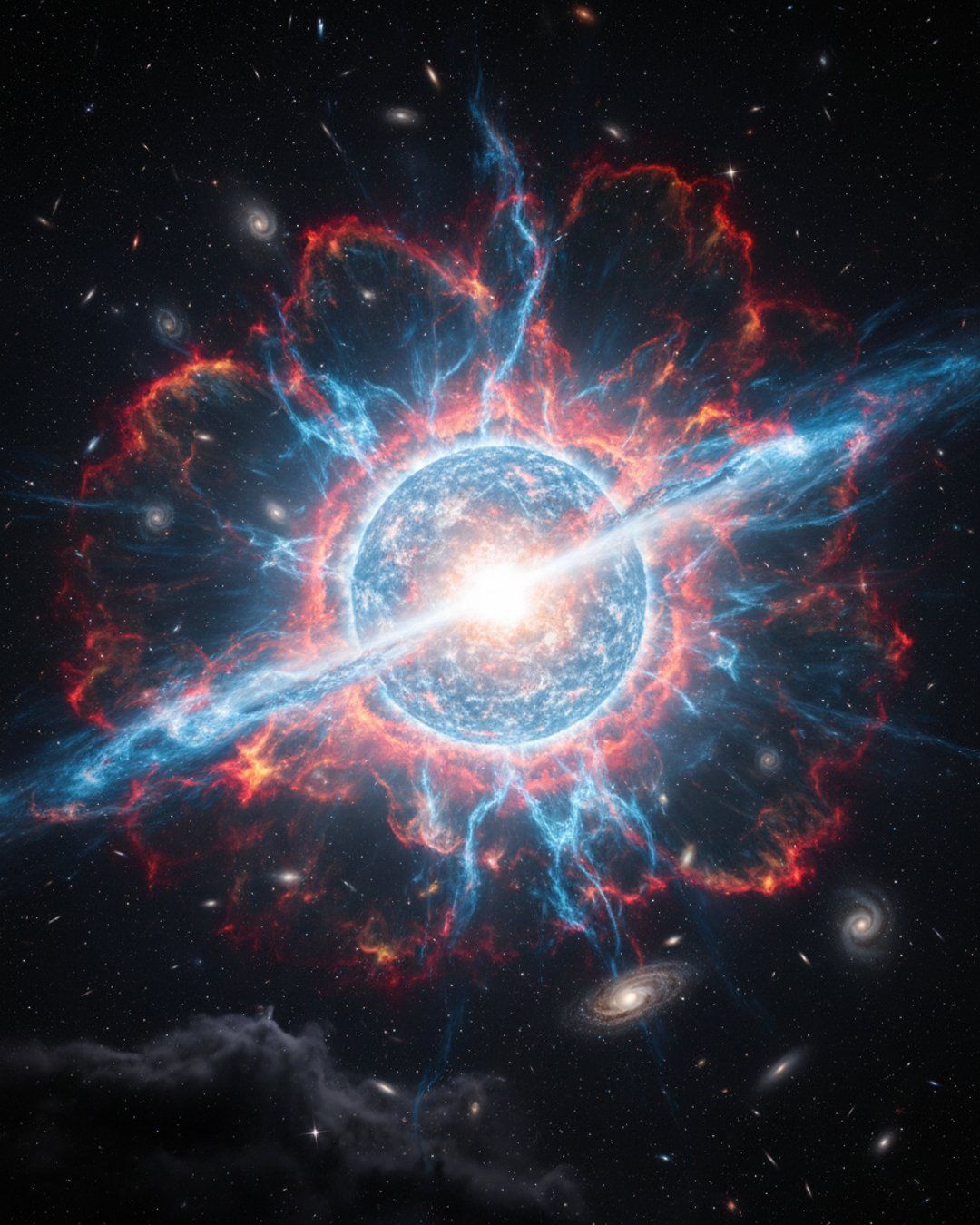
A massive star exploding into a bright supernova in deep space.

NASA’s Webb telescope sees the final hours of a star that exploded 340 years ago

New data from the James Webb Space Telescope suggests a massive star's internal layers merged just hours before it went supernova.

Science · Nov 231/5
Stellar record

Dust preserves the chemical past

Stars grow by fusing elements in layers, like an onion. As they age, they burn heavier material toward the core.

When a star explodes, these elements scatter and condense into dust. By analyzing individual clumps the size of our solar system, Webb revealed that these internal shells began to churn and mix right before the blast.

Science · Nov 232/5

Tracing the ghost of a star

Using mid-infrared light, researchers mapped three distinct regions of the Cassiopeia A remnant.

Science · Nov 233/5
Team effort

Clues from across the spectrum

To find these clues, scientists combined Webb’s sharp eyes with data from three other missions:

  • The retired Spitzer telescope helped identify targets.
  • The Chandra X-ray Observatory provided heat data.
  • The XRISM satellite mapped the speed and motion of the debris.
Science · Nov 234/5

Building the next generation

This research explains how heavy elements enrich the galaxy to form new planets.

Science · Nov 235/5

You've read all 5 cards

The full story has more

NASA’s Webb telescope sees the final hours of a star that exploded 340 years ago

  • The complete story, start to finish
  • 1 link to go deeper
  • Comments and what to read next
Read the full story
Science · Nov 23

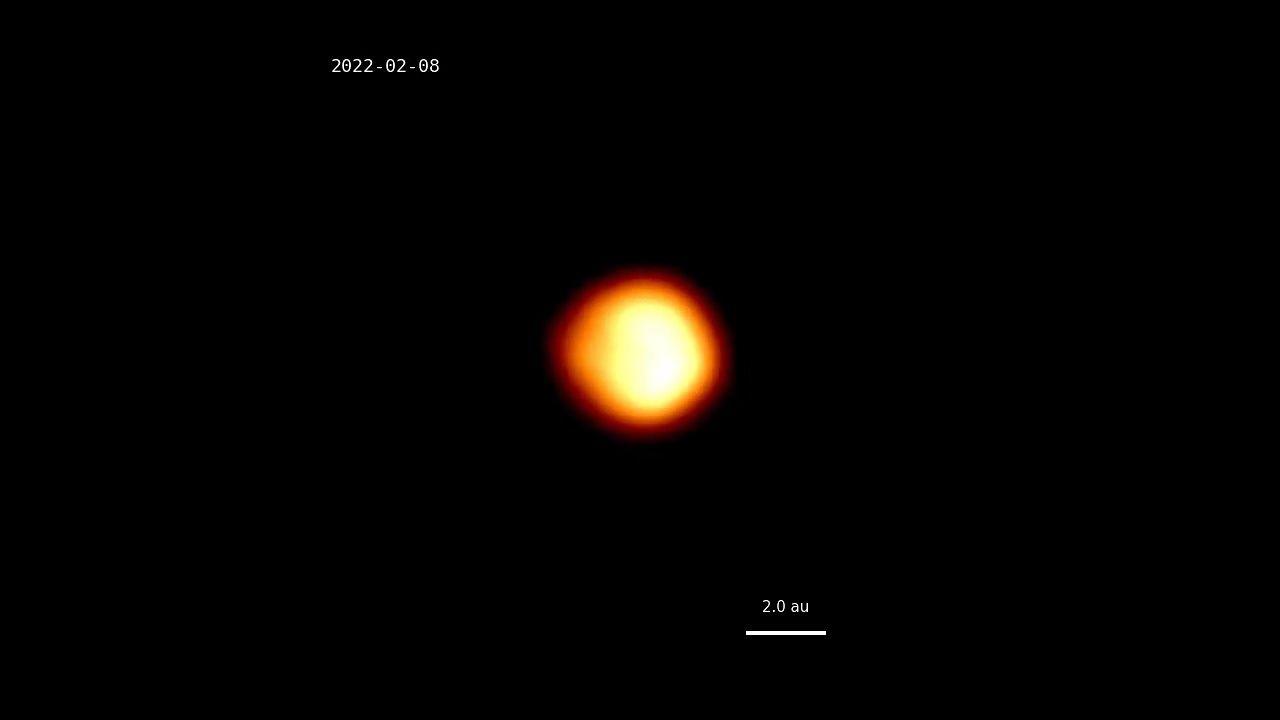
A giant star's magnetic eruption reveals the secret origin of our atoms

Astronomers captured a massive eruption from the red giant Mira that is reshaping our understanding of how galaxies grow.

Science · Nov 231/7
YouTube · Onsala rymdobservatorium
Science · Nov 232/7

Magnetism powers the cosmos

For years, scientists believed starlight pushed dust out of old stars to seed the universe with new elements.

Science · Nov 233/7
Giant loops

Gases reach past Saturn

A single magnetic flare on Mira's surface created a loop of gas stretching as far as Saturn is from our sun.

Science · Nov 234/7

Spreading the seeds of life

Stars like Mira produce the carbon, oxygen, and nitrogen found in our bodies.

Science · Nov 235/7
Solar future

A preview of our own sun

Mira is a preview of our sun's future, showing how it will eventually grow cooler and windier in a few billion years.

Science · Nov 236/7
Big shift

Rewriting the history of Earth

The discovery suggests that Earth might not exist without ancient magnetic storms on distant red giants. Researchers say we must now factor these magnetic forces into the entire "galaxy ecosystem" to understand how solar systems like ours were first built.

Science · Nov 237/7

You've read all 7 cards

The full story has more

A giant star's magnetic eruption reveals the secret origin of our atoms

  • The complete story, start to finish
  • 1 link to go deeper
  • Comments and what to read next
Read the full story
Science · Nov 23

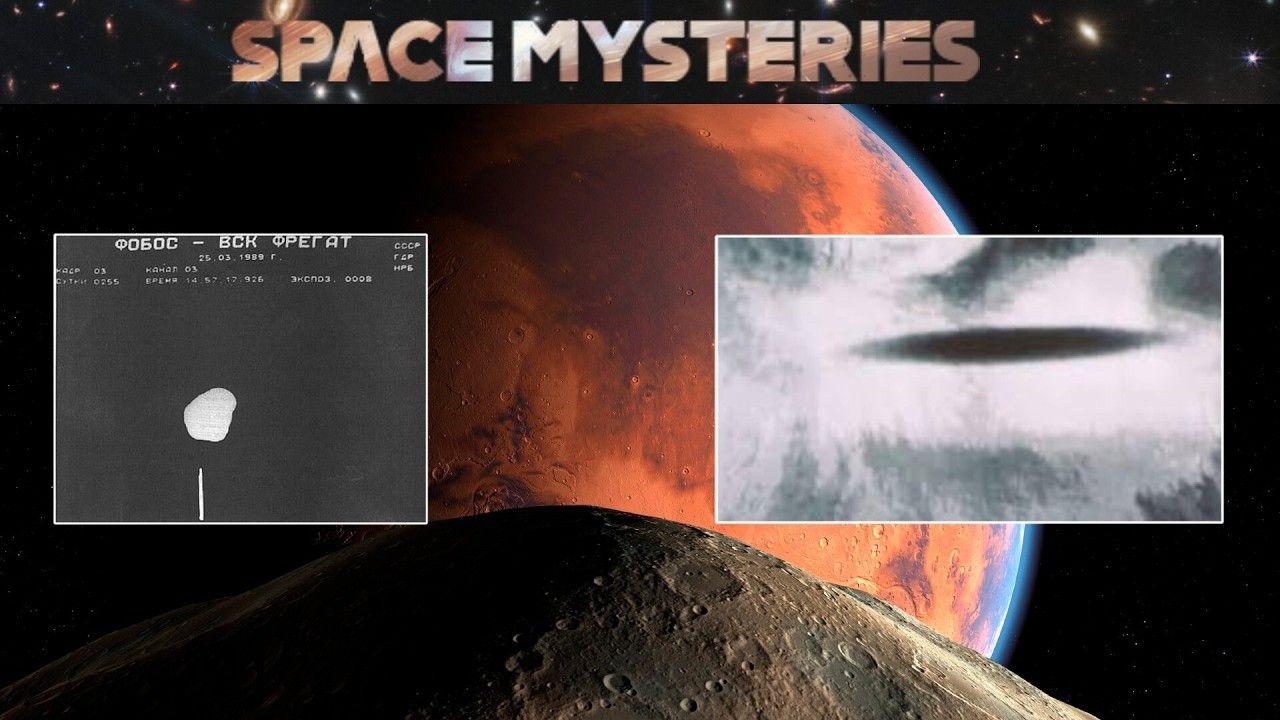
A 'cigar-shaped' shadow and the mysterious death of a Soviet Mars probe

Launched in 1988, the Phobos 2 probe carried the hopes of a fading superpower and instruments from 12 different nations.

Space · Nov 231/8
YouTube · VideoFromSpace
Space · Nov 232/8

Silent signal from the moon

On March 27, 1989, the spacecraft turned to photograph the Martian moon Phobos.

Space · Nov 233/8
UFO rumors

The mystery of the cigar shadow

Final images sent by the probe showed a strange, elongated dark shape on the Martian surface that sparked decades of alien theories.

Space · Nov 234/8

Allegations of an alien mothership

The mystery grew in 1991 when Marina Popovich, a legendary Soviet test pilot, claimed the object was an alien mothership.

Space · Nov 235/8
Real science

Explaining the haunting optics

Scientists eventually found that the 'UFO' was actually the moon's own shadow, stretched thin by the angle of the sun.

Space · Nov 236/8
The breakdown

The true cause of the crash

The probe likely failed because of its computer. Two of its three flight processors were already acting up by the time it reached Mars.

When the second one died, the final computer couldn't handle the ship alone. Without a backup, the probe couldn't keep its solar panels toward the sun.

Space · Nov 237/8
Mixed legacy

A tragic but valuable end

Despite its early death, Phobos 2 sent back more data about the Red Planet than all previous Soviet missions combined.

Space · Nov 238/8

You've read all 8 cards

The full story has more

A 'cigar-shaped' shadow and the mysterious death of a Soviet Mars probe

  • The complete story, start to finish
  • 1 link to go deeper
  • Comments and what to read next
Read the full story
Space · Nov 23

Astronomers find a 'system that should not exist' just 28 light-years away

Located just 28 light-years from Earth, Welopō'ai contains two white dwarfs and a red dwarf in a configuration that scientists cannot yet explain.

Space · Nov 231/5
Accidental find

A search for planets went sideways

Researchers at the Université de Montréal were using the SPIRou instrument in Hawaii to hunt for exoplanets around a dim red dwarf.

Instead of a planet, they found a massive gravitational wobble moving at 10 miles per second. The source was a hidden, dead star.

Space · Nov 232/5

Two white dwarfs and one survivor

The system features two white dwarfs—the dense remnants of sun-like stars—and a single red dwarf that continues to burn.

Space · Nov 233/5
Scientific puzzle

The math behind their survival

  • Red dwarf mass: 42% of our sun
  • Inner white dwarf: 62% of our sun's mass
  • Orbital distance: 4.6 astronomical units

When a star becomes a white dwarf, it first expands into a red giant. This process should have swallowed or destabilized the nearby red dwarf, yet it remains in a stable orbit.

Space · Nov 234/5

Testing the limits of physics

Researchers will use the system to study electron degeneracy pressure and how stars evolve in tight groups.

Space · Nov 235/5

You've read all 5 cards

The full story has more

Astronomers find a 'system that should not exist' just 28 light-years away

  • The complete story, start to finish
  • 1 link to go deeper
  • Comments and what to read next
Read the full story
Space · Nov 23

That's everything for now

New stories arrive throughout the day.
TimesJetHomeExploreNotificationsSavedProfileYou
Reading as a guestSaves stay on this device. Sign in to like, comment and follow topics.