
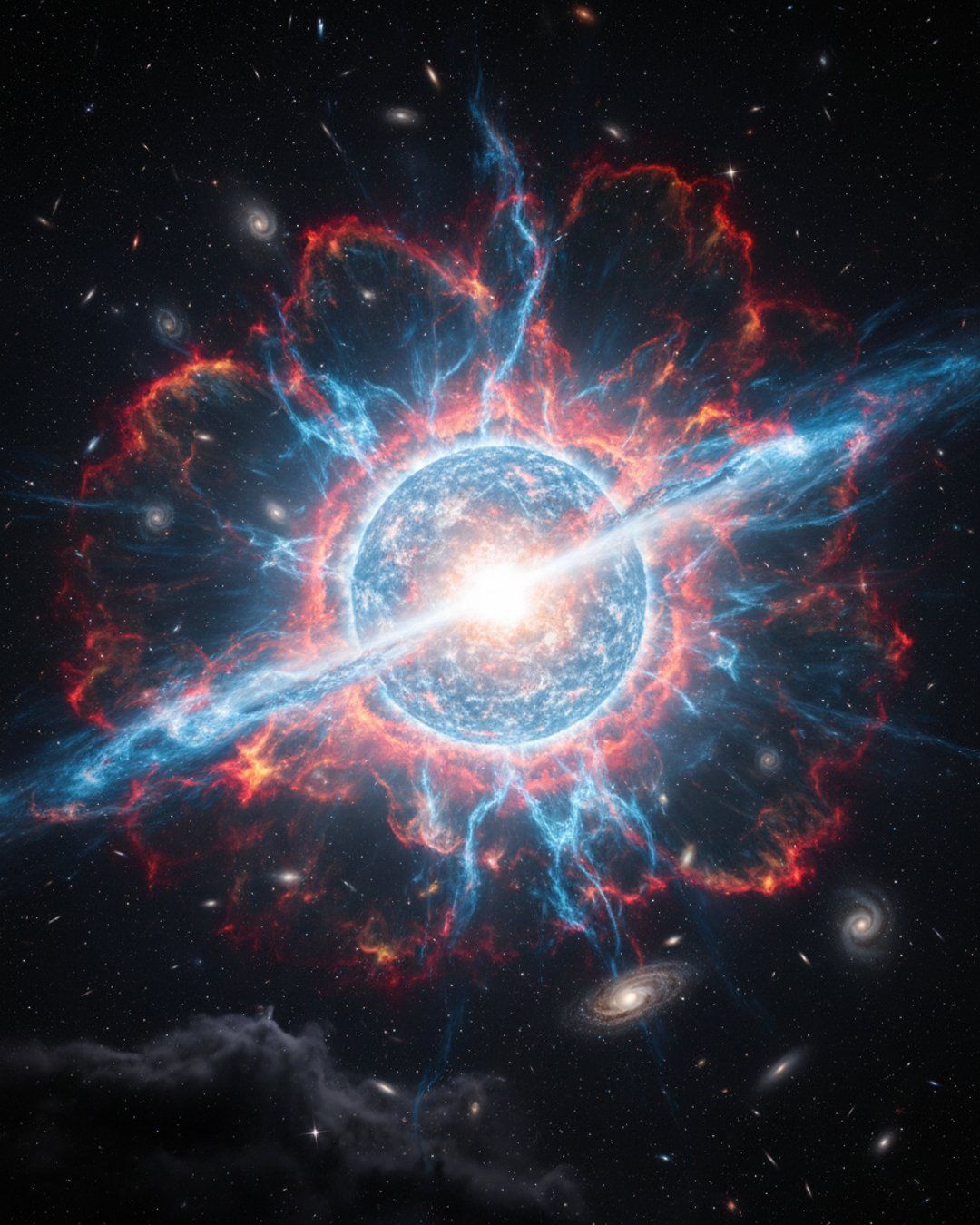
NASA’s Webb telescope sees the final hours of a star that exploded 340 years ago
- A star's violent final moments
- Dust preserves the chemical past
- Tracing the ghost of a star
The story
A star's violent final moments
New data from the James Webb Space Telescope suggests a massive star's internal layers merged just hours before it went supernova.
Dust preserves the chemical past
Stars grow by fusing elements in layers, like an onion. As they age, they burn heavier material toward the core.
When a star explodes, these elements scatter and condense into dust. By analyzing individual clumps the size of our solar system, Webb revealed that these internal shells began to churn and mix right before the blast.
Tracing the ghost of a star
Using mid-infrared light, researchers mapped three distinct regions of the Cassiopeia A remnant.
Clues from across the spectrum
To find these clues, scientists combined Webb’s sharp eyes with data from three other missions:
- The retired Spitzer telescope helped identify targets.
- The Chandra X-ray Observatory provided heat data.
- The XRISM satellite mapped the speed and motion of the debris.
Building the next generation
This research explains how heavy elements enrich the galaxy to form new planets.
NASA's James Webb Space Telescope has captured new details of Cassiopeia A, a famous supernova remnant. By studying the clouds of gas and dust left behind by a massive star's explosion, astronomers have been able to reconstruct the star’s final hours. The data suggests that the star's internal layers underwent a dramatic change, merging together just before the collapse.
Massive stars are structured in shells, with different elements like hydrogen, carbon, and oxygen burning at different depths. As the star nears its end, these shells can begin to circulate and mix. This process, known as a shell merger, significantly changes the chemical makeup of the material thrown out during the supernova explosion.
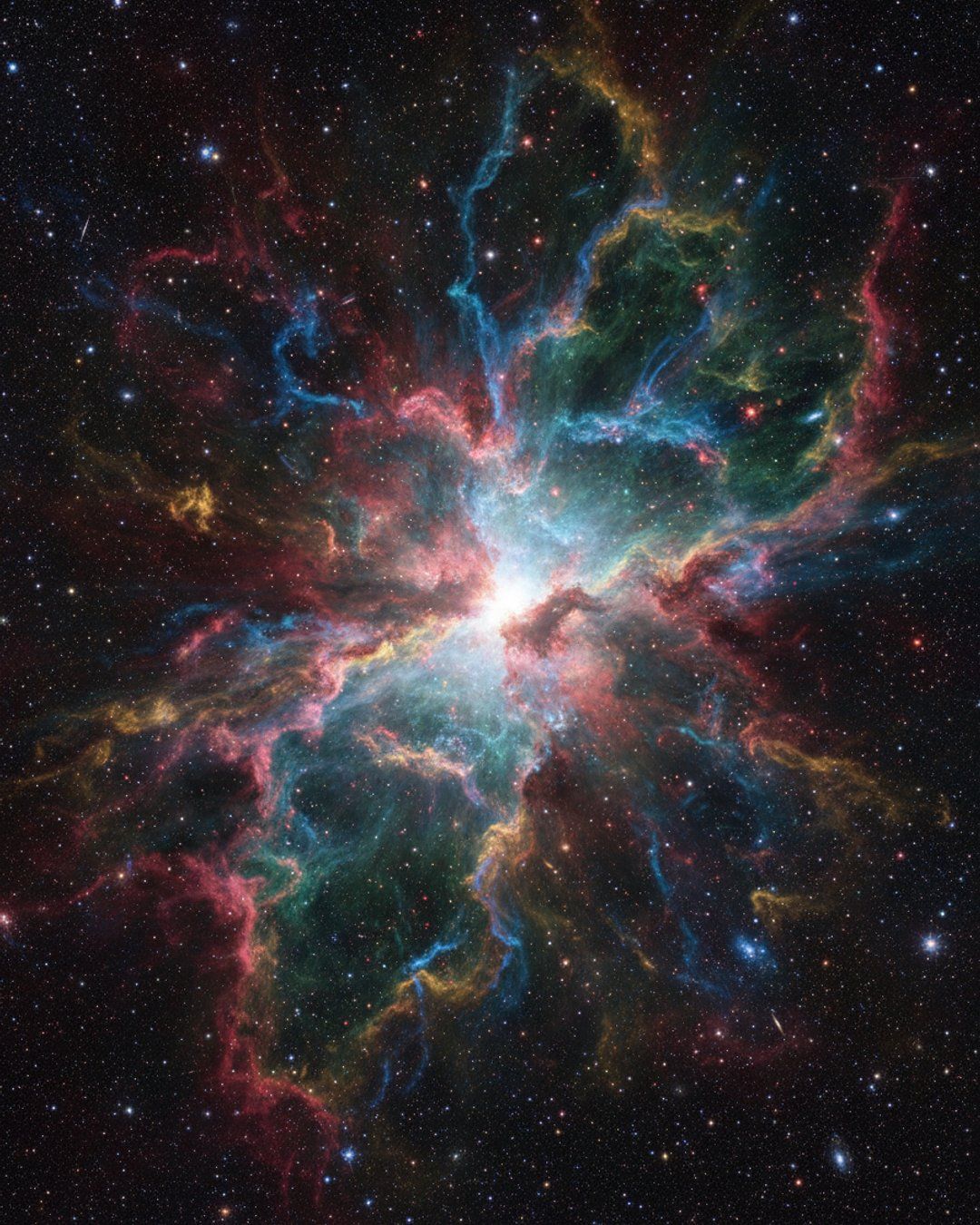
Researchers used Webb’s mid-infrared instruments to map the composition of dust clumps throughout the remnant. They found specific areas dominated by silica and carbon, as well as a structure nicknamed the 'Green Monster' rich in magnesium silicates. These findings confirm that the merger was underway shortly before the star died.
This discovery was made possible by combining Webb's high-resolution images with X-ray data from other NASA and JAXA missions. Together, these observations provide a new way for astronomers to study the life cycles of stars that exploded hundreds of years ago.
Understanding these final moments is essential for tracing the history of the universe. The elements scattered by supernovas eventually form the dust and gas that seed the next generation of stars and planets. By looking at these ancient remnants, scientists are learning how the building blocks of our own solar system were first created.
Source: Phys.org ↗
Illustration: AI-generated
Links in this story

How does this story make you feel?
Read next
 ScienceScotland's £19 billion food sector faces a freezing crisis over net-zero costs
 ScienceUT Austin engineers find a way to make quantum computers 7 times faster
 ScienceTobacco plants could slash the price of life-saving cancer drugs
 ScienceKilauea lava fountains shoot 650 feet high in overnight Hawaii eruption
Comments