
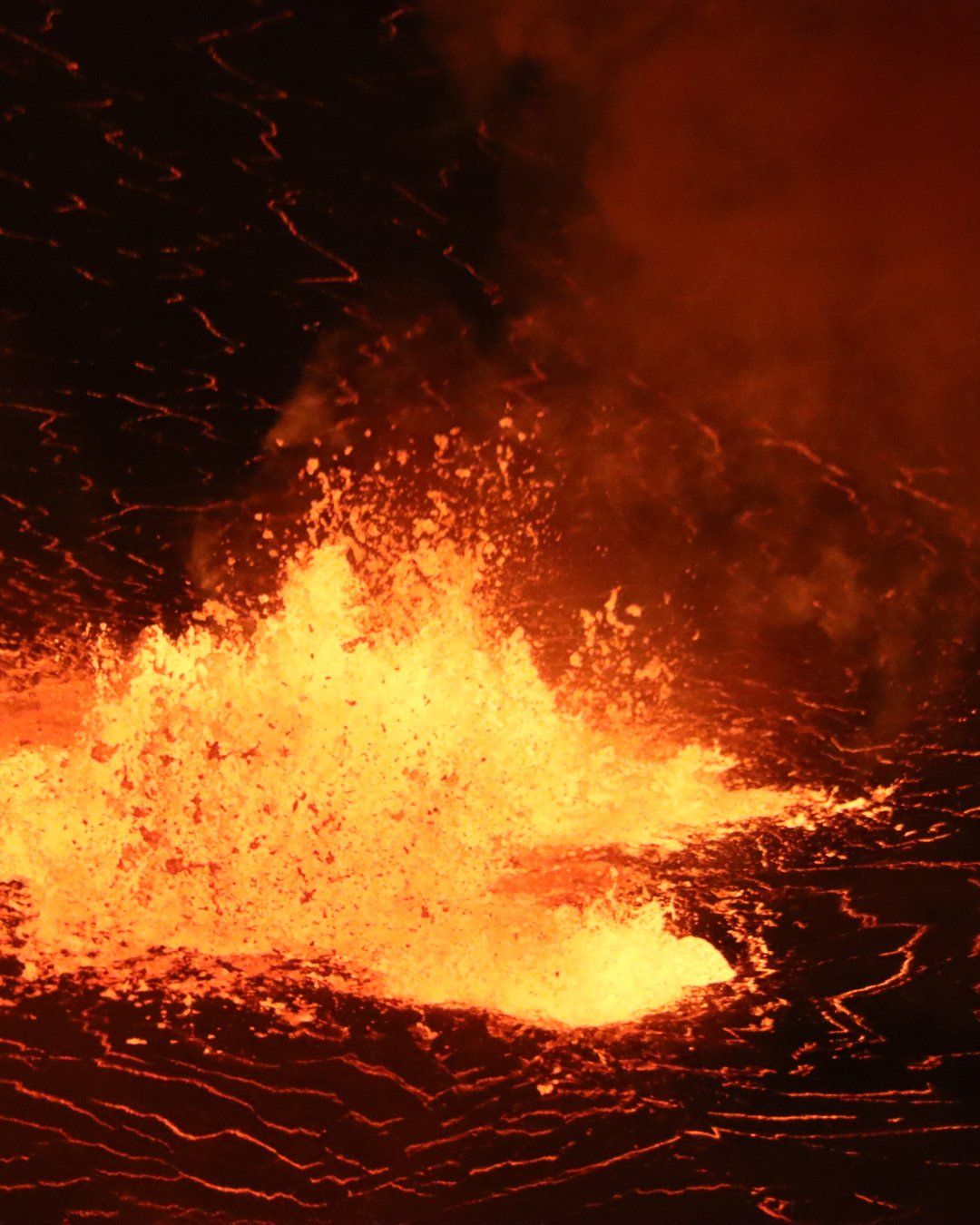
Kilauea lava fountains shoot 650 feet high in overnight Hawaii eruption
- Kilauea eruption lights up Hawaii
- Six hours of fiery activity
- Plume reaches 20,000 feet
The story
Kilauea eruption lights up Hawaii
Lava fountaining from the summit crater reached 650 feet high before ending abruptly on Monday morning.
Six hours of fiery activity
Episode 57 of the volcano's current eruption cycle began shortly after midnight on November 23. For nearly 6 hours, the north vent in the Halemaʻumaʻu crater sprayed molten rock continuously.
By 6 a.m., the fountaining stopped, leaving lava flows covering roughly 50% of the crater floor.
Plume reaches 20,000 feet
A massive volcanic plume rose to 20,000 feet above sea level, scattering ash and glass particles across the island.
Winds blow gas and ash
- Trade winds pushed gas and small volcanic fragments toward the south and southwest.
- Experts measured 1,200 tons of sulfur dioxide being released daily.
- Glassy fragments like Pele’s hair were detected as high as 14,500 feet by radar.
- The National Weather Service warned residents of potential respiratory irritation.
Alert levels lowered after pause
Geologists lowered the volcano alert level to Advisory as the active fountaining phase ended before sunrise.
Magma is already recharging
The pause may be brief. Instruments at the summit show the ground is already inflating again, which means magma is refilling the reservoir.
Experts at the Hawaiian Volcano Observatory say this pattern suggests another fountaining episode is likely to occur within the next few weeks.
Kilauea volcano put on a spectacular display on the morning of November 23, 2026, as Episode 57 of its ongoing eruption cycle sent lava fountaining 650 feet into the air. The activity began around 12:15 a.m. at the Halemaʻumaʻu crater and lasted nearly 6 hours. The eruption was so bright it illuminated nearby Mauna Loa and the surrounding landscape.
The fountaining created a massive volcanic plume that reached 20,000 feet above sea level. This plume carried sulfur dioxide gas and tiny, glassy volcanic particles known as tephra. Light trade winds dispersed these materials toward the south and southwest, prompting weather officials to issue statements regarding air quality and falling ash.
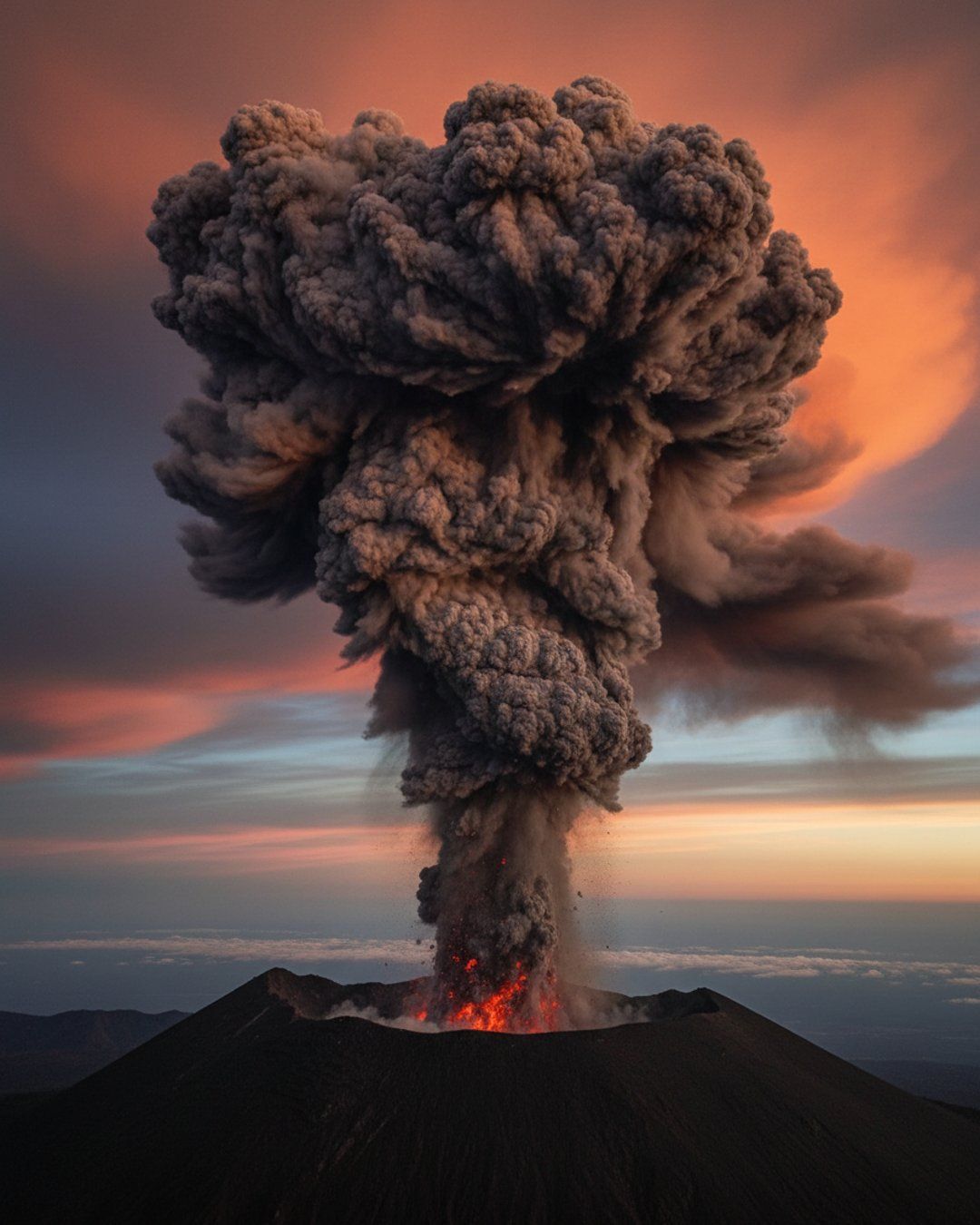
By 6:00 a.m., the fountaining stopped abruptly. Geologists from the USGS Hawaiian Volcano Observatory lowered the alert level from Watch to Advisory as the immediate threat of high-altitude ash plumes subsided. Lava flows from the event covered about half of the crater floor, though the activity remained confined to the summit caldera within Hawaii Volcanoes National Park.
Despite the current pause, the volcano remains restless. Sensors at the summit began recording "inflationary tilt" almost immediately after the fountaining ended. This indicates that magma is already moving back into the summit reservoir, a signal that usually precedes another eruptive episode. Scientists expect more activity in the coming weeks.
Source: volcanoes.usgs.gov, bigislandvideonews.com, volcanoes.usgs.gov 2 ↗
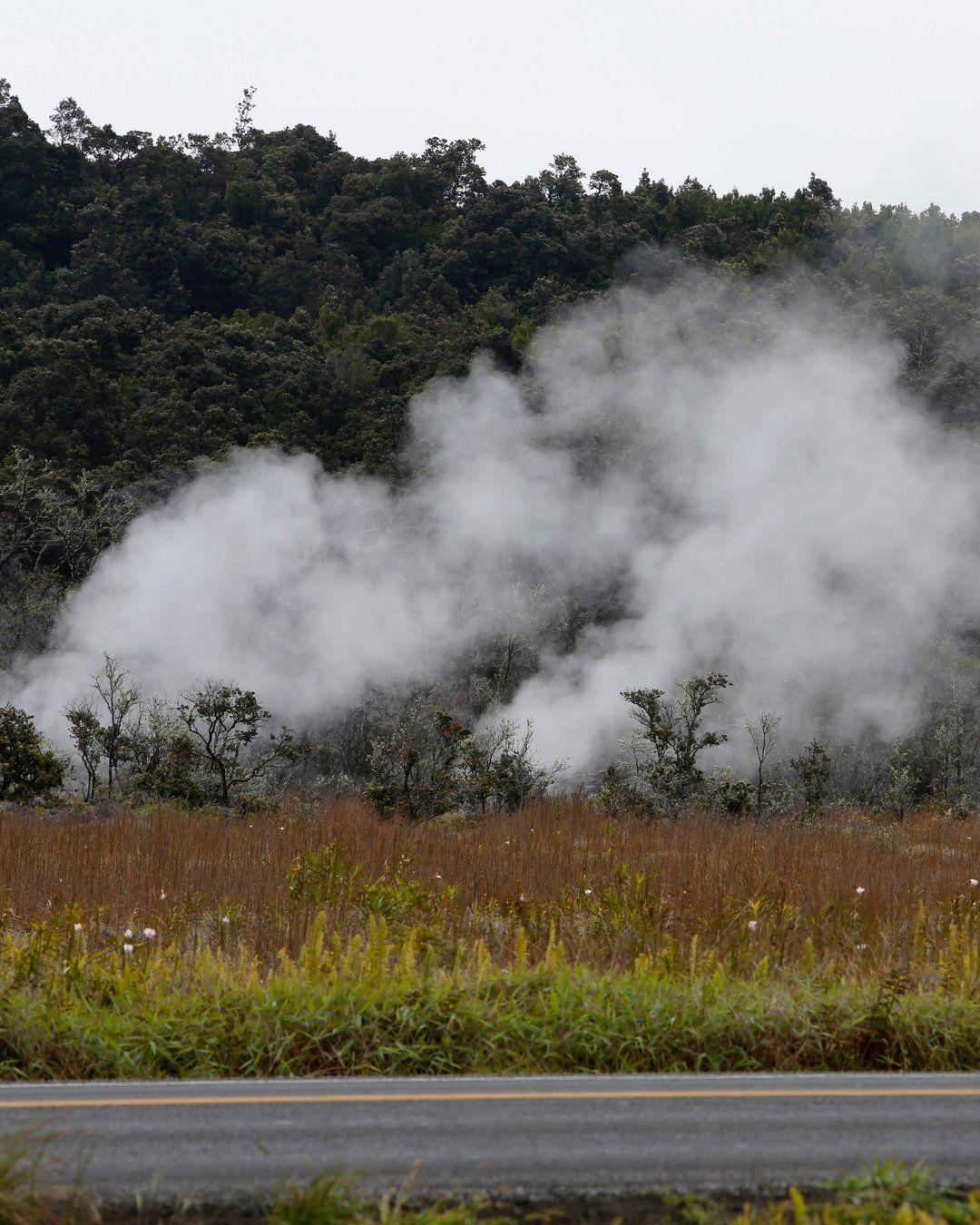
Photos: Michael Szoenyi, Public domain; USGS Hawaiian Volcano Observatory, Public domain
Illustration: AI-generated
Links in this story

How does this story make you feel?
Read next
 ScienceScotland's £19 billion food sector faces a freezing crisis over net-zero costs
 ScienceUT Austin engineers find a way to make quantum computers 7 times faster
 ScienceTobacco plants could slash the price of life-saving cancer drugs
 ScienceNASA’s Webb telescope sees the final hours of a star that exploded 340 years ago
Comments