Skip to content
TimesJetHomeExploreNotificationsSavedProfileYou
Reading as a guestSaves stay on this device. Sign in to like, comment and follow topics.
Ask AI about today's news

Latest

1MST3K revives the legendary 'Turkey Day' marathon for 2026Games2Suzlon and Persistent Systems hit by separate cyberattacksBusiness3Michelle Yeoh leads Blade Runner's 2099 cyberpunk returnSpace4West Bengal seeks a new name to honor its 1947 partition historyTrending5Scotland's £19 billion food sector faces a freezing crisis over net-zero costsScience

Topics

Tech
Startups
Business
Health
Trending
Space
Science
Games

© 2026 TimesJet

Skip to content
#earth
#

#earth

5 stories

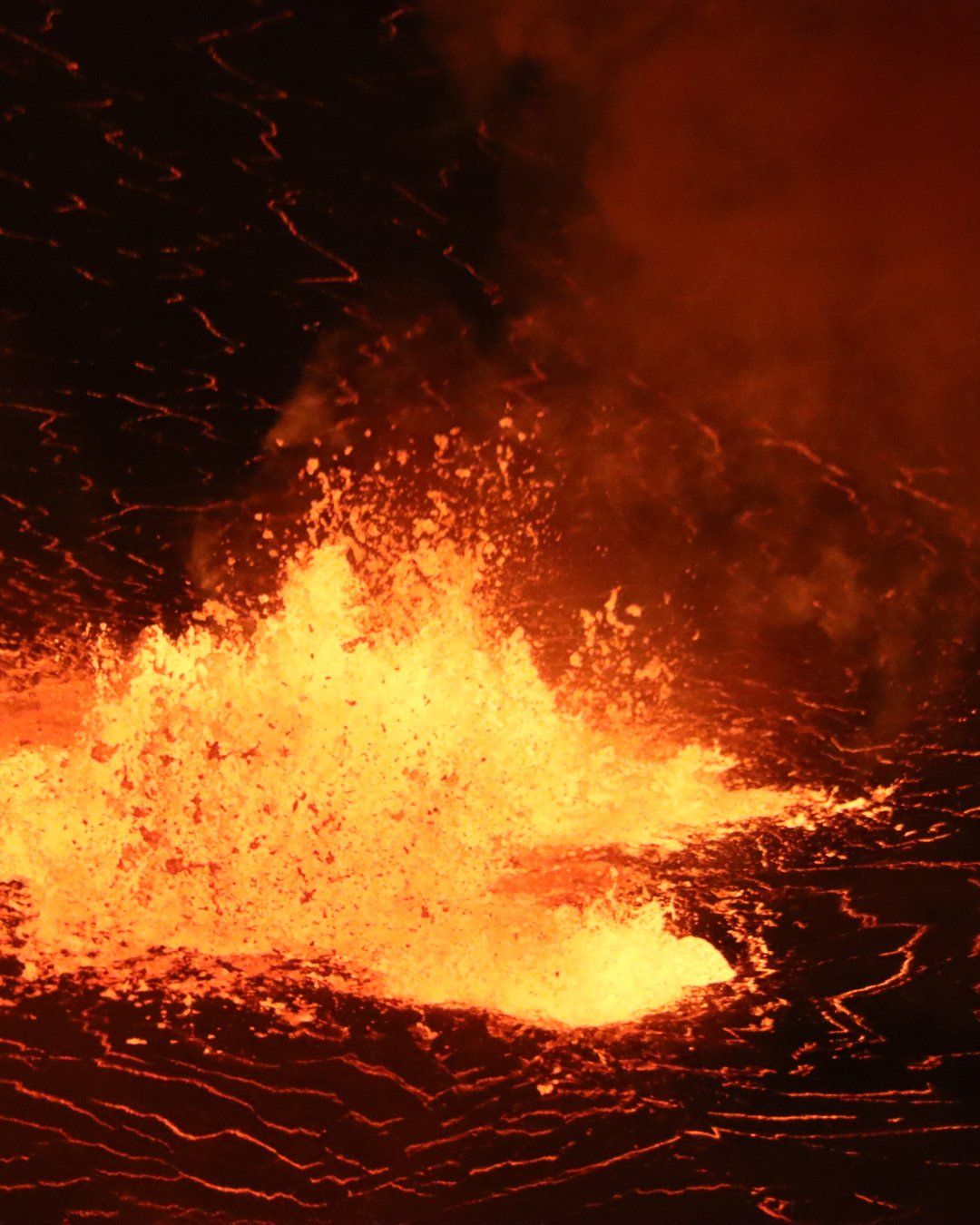
Tall glowing orange lava fountain erupting from a volcanic crater into the night sky.

Kilauea lava fountains shoot 650 feet high in overnight Hawaii eruption

Lava fountaining from the summit crater reached 650 feet high before ending abruptly on Monday morning.

Science · Nov 241/6
The timeline

Six hours of fiery activity

Episode 57 of the volcano's current eruption cycle began shortly after midnight on November 23. For nearly 6 hours, the north vent in the Halemaʻumaʻu crater sprayed molten rock continuously.

By 6 a.m., the fountaining stopped, leaving lava flows covering roughly 50% of the crater floor.

Science · Nov 242/6

Plume reaches 20,000 feet

A massive volcanic plume rose to 20,000 feet above sea level, scattering ash and glass particles across the island.

Science · Nov 243/6
Air quality

Winds blow gas and ash

  • Trade winds pushed gas and small volcanic fragments toward the south and southwest.
  • Experts measured 1,200 tons of sulfur dioxide being released daily.
  • Glassy fragments like Pele’s hair were detected as high as 14,500 feet by radar.
  • The National Weather Service warned residents of potential respiratory irritation.
Science · Nov 244/6

Alert levels lowered after pause

Geologists lowered the volcano alert level to Advisory as the active fountaining phase ended before sunrise.

Science · Nov 245/6
What's next

Magma is already recharging

The pause may be brief. Instruments at the summit show the ground is already inflating again, which means magma is refilling the reservoir.

Experts at the Hawaiian Volcano Observatory say this pattern suggests another fountaining episode is likely to occur within the next few weeks.

Science · Nov 246/6

You've read all 6 cards

The full story has more

Kilauea lava fountains shoot 650 feet high in overnight Hawaii eruption

  • The complete story, start to finish
  • 3 links to go deeper
  • Comments and what to read next
Read the full story
Science · Nov 24

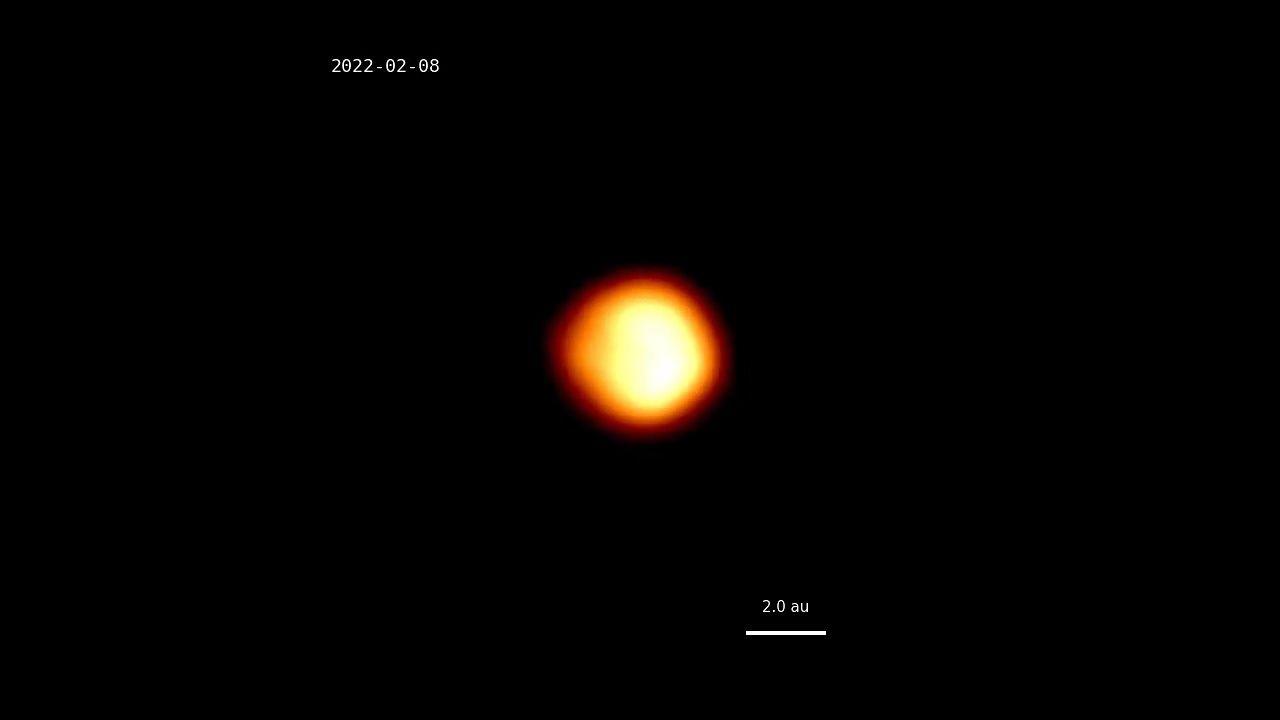
A giant star's magnetic eruption reveals the secret origin of our atoms

Astronomers captured a massive eruption from the red giant Mira that is reshaping our understanding of how galaxies grow.

Science · Nov 231/7
YouTube · Onsala rymdobservatorium
Science · Nov 232/7

Magnetism powers the cosmos

For years, scientists believed starlight pushed dust out of old stars to seed the universe with new elements.

Science · Nov 233/7
Giant loops

Gases reach past Saturn

A single magnetic flare on Mira's surface created a loop of gas stretching as far as Saturn is from our sun.

Science · Nov 234/7

Spreading the seeds of life

Stars like Mira produce the carbon, oxygen, and nitrogen found in our bodies.

Science · Nov 235/7
Solar future

A preview of our own sun

Mira is a preview of our sun's future, showing how it will eventually grow cooler and windier in a few billion years.

Science · Nov 236/7
Big shift

Rewriting the history of Earth

The discovery suggests that Earth might not exist without ancient magnetic storms on distant red giants. Researchers say we must now factor these magnetic forces into the entire "galaxy ecosystem" to understand how solar systems like ours were first built.

Science · Nov 237/7

You've read all 7 cards

The full story has more

A giant star's magnetic eruption reveals the secret origin of our atoms

  • The complete story, start to finish
  • 1 link to go deeper
  • Comments and what to read next
Read the full story
Science · Nov 23

Europe’s Hera probe returns to the asteroid NASA hit to save Earth

A European probe is returning to the site of a 13,000 mph collision to see if planetary defense really works.

Space · Nov 231/6
The target

Revisiting the crash site

In 2022, NASA’s DART probe intentionally slammed into Dimorphos, a small "moonlet" orbiting a larger asteroid. The goal was to test if a kinetic impact could change a space rock's trajectory. Now, the European Space Agency's Hera probe is returning to document the aftermath.

Space · Nov 232/6

Moving more than expected

NASA's impact changed the asteroid's 12-hour orbit by 33 minutes, far more than the one minute scientists had hoped for.

Space · Nov 233/6
High tech

Mapping the new crater

Hera will use lidar and high-resolution cameras to map the asteroid’s surface at 1 meter per pixel. By studying the impact site, researchers can determine if the rock’s gravity or its physical strength played a bigger role in how much it moved.

Space · Nov 234/6

Deploying the CubeSats

In early 2027, Hera will release two shoebox-sized satellites, Juventas and Milani, to land and scan 100 meters inside the rock.

Space · Nov 235/6
The stakes

Defending against the 43,000

Since 2000, the count of known near-Earth asteroids has jumped from 300 to over 43,000. While no immediate threat exists, the data from Hera is vital for missions like the 2029 flyby of Apophis, a 450-meter-wide rock that will pass closer to Earth than many satellites.

Space · Nov 236/6

You've read all 6 cards

The full story has more

Europe’s Hera probe returns to the asteroid NASA hit to save Earth

  • The complete story, start to finish
  • 1 link to go deeper
  • Comments and what to read next
Read the full story
Space · Nov 23

Scientists find sterile soil can still breathe like a living organism

French biochemists found soil stripped of all living microbes kept consuming oxygen and releasing carbon dioxide for over six years.

Science · Nov 231/6
Sterilization

A quest to find the source

Biochemist Sébastien Fontaine began the experiment 15 years ago. He blasted soil with gamma radiation to kill every microbe, expecting carbon emissions to stop.

Instead, the soil kept "breathing." He tried more radiation, heat, and pressure, but the metabolic activity persisted in the lifeless jars.

Science · Nov 232/6

Life without living cells

The sterile dirt held four of the eight molecules of the Krebs cycle, the chemistry that normally powers living cells.

Science · Nov 233/6
Evidence

Tracking the flow of energy

To prove the activity wasn't an error, the team built a fuel cell. They found that the 5-year-old sterile soil supported an electrical current.

This flow of electrons indicated that the same oxygen-dependent processes that keep us alive were unfolding among the minerals and metals of the dirt.

Science · Nov 234/6

Chemistry before life

Iron and zinc in soil may drive these reactions, suggesting metabolism existed before the first cells and helped them emerge.

Science · Nov 235/6
Next steps

A new look at our world

While some critics suggest dead enzymes might cause the effect, Fontaine notes that no enzyme is known to last six years.

Researchers are now looking for other biological cascades in nature that may have prebiotic origins, hidden right under our feet in the terrestrial soil.

Science · Nov 236/6

You've read all 6 cards

The full story has more

Scientists find sterile soil can still breathe like a living organism

  • The complete story, start to finish
  • 1 link to go deeper
  • Comments and what to read next
Read the full story
Science · Nov 23
A 'Godzilla' El Niño is threatening to push 49 million people into hunger

That's everything for now

New stories arrive throughout the day.
TimesJetHomeExploreNotificationsSavedProfileYou
Reading as a guestSaves stay on this device. Sign in to like, comment and follow topics.