
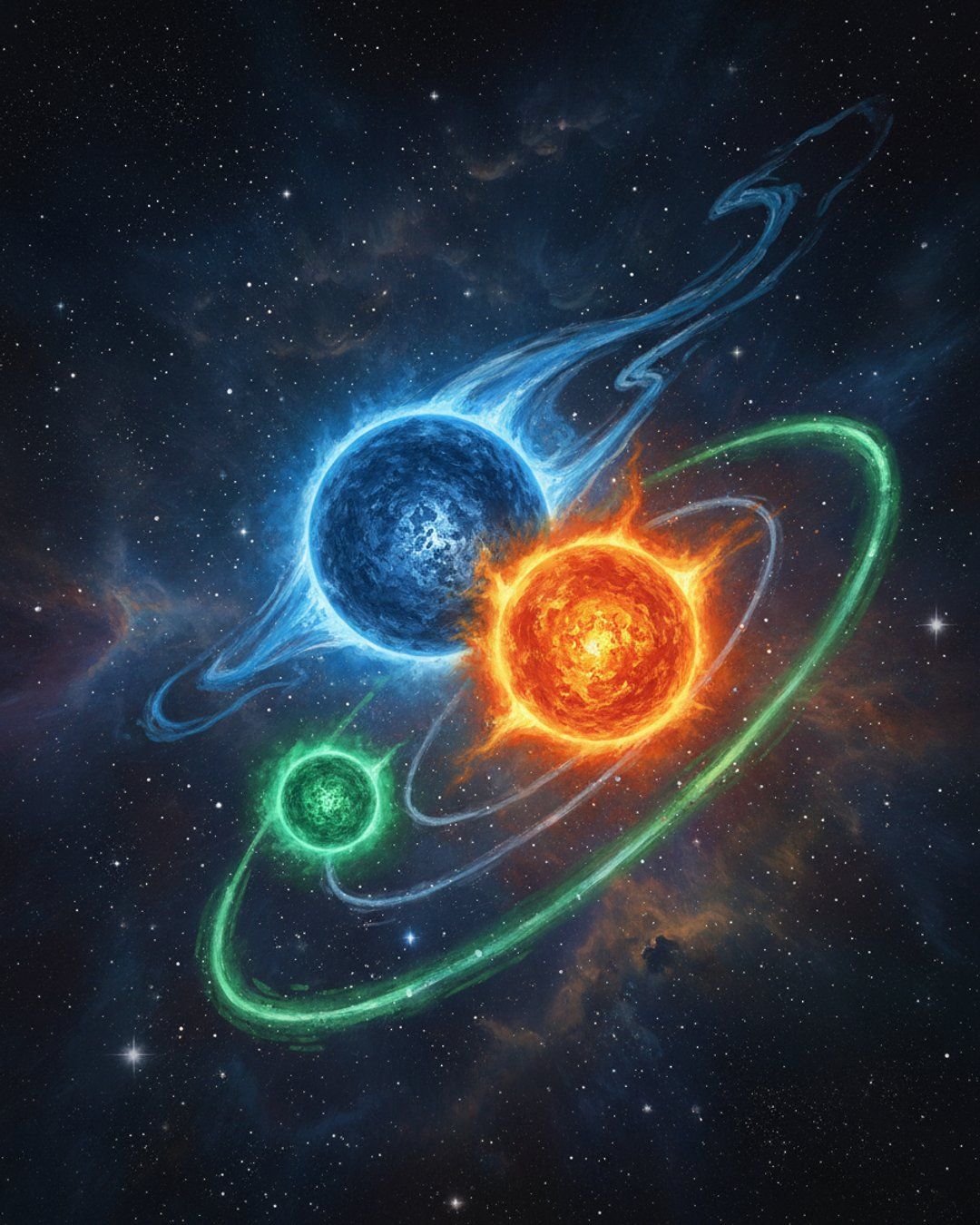
Astronomers find a 'system that should not exist' just 28 light-years away
- Triple star system defies current models
- A search for planets went sideways
- Two white dwarfs and one survivor
The story
Triple star system defies current models
Located just 28 light-years from Earth, Welopō'ai contains two white dwarfs and a red dwarf in a configuration that scientists cannot yet explain.
A search for planets went sideways
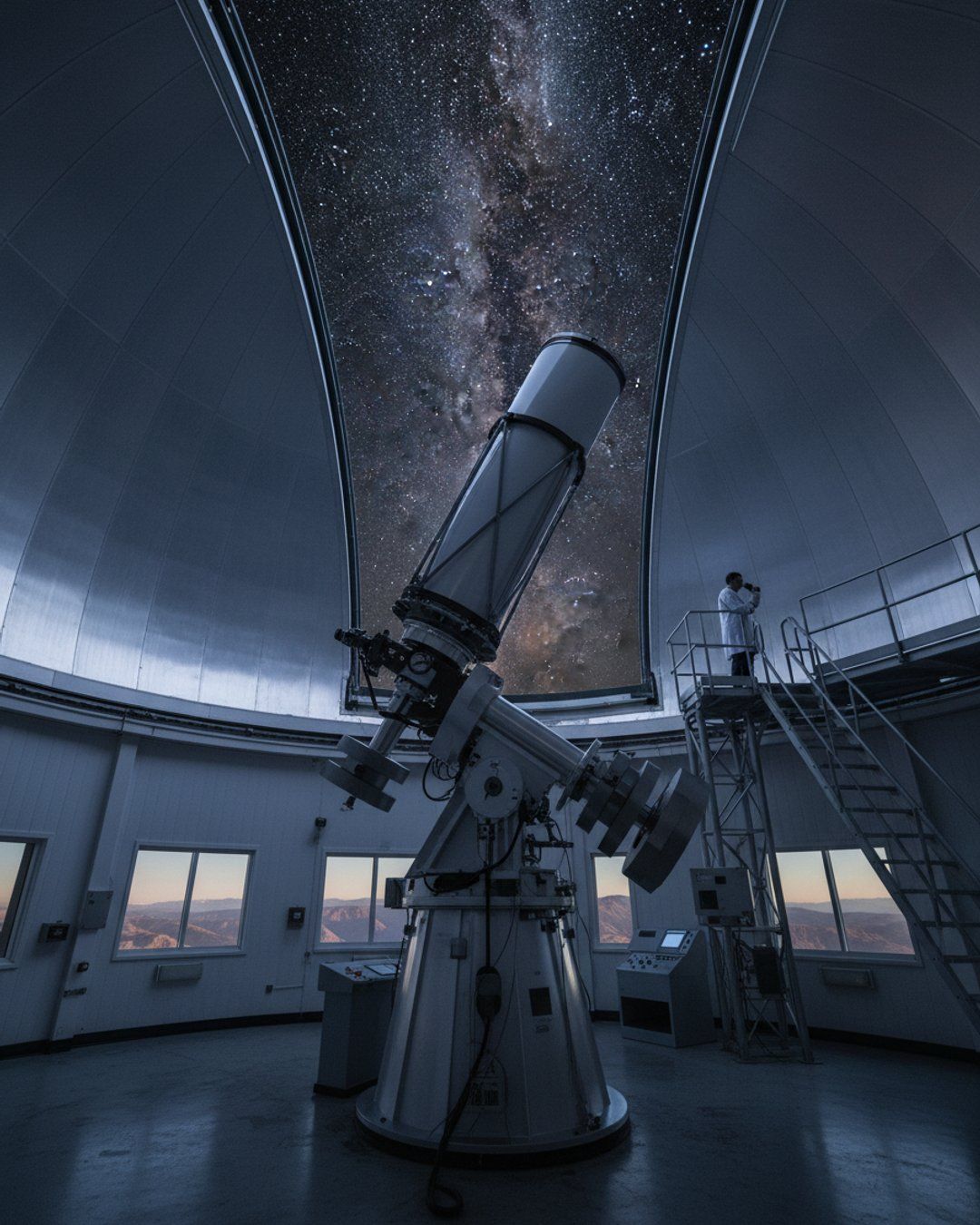
Researchers at the Université de Montréal were using the SPIRou instrument in Hawaii to hunt for exoplanets around a dim red dwarf.
Instead of a planet, they found a massive gravitational wobble moving at 10 miles per second. The source was a hidden, dead star.
Two white dwarfs and one survivor
The system features two white dwarfs—the dense remnants of sun-like stars—and a single red dwarf that continues to burn.
The math behind their survival
- Red dwarf mass: 42% of our sun
- Inner white dwarf: 62% of our sun's mass
- Orbital distance: 4.6 astronomical units
When a star becomes a white dwarf, it first expands into a red giant. This process should have swallowed or destabilized the nearby red dwarf, yet it remains in a stable orbit.
Testing the limits of physics
Researchers will use the system to study electron degeneracy pressure and how stars evolve in tight groups.
Astronomers have discovered a rare and baffling triple star system located only 28 light-years from our solar system. Named Welopō'ai, the system consists of one small red dwarf star and two white dwarfs. Researchers say the configuration is so unusual that they have no clear explanation for how it survived its own evolution.
The discovery was accidental. While searching for planets orbiting the red dwarf, scientists at the Université de Montréal noticed a massive gravitational pull. They realized the signal was too strong to be a planet; it was actually a white dwarf, the dense remnant of a star that was once much larger than our sun.
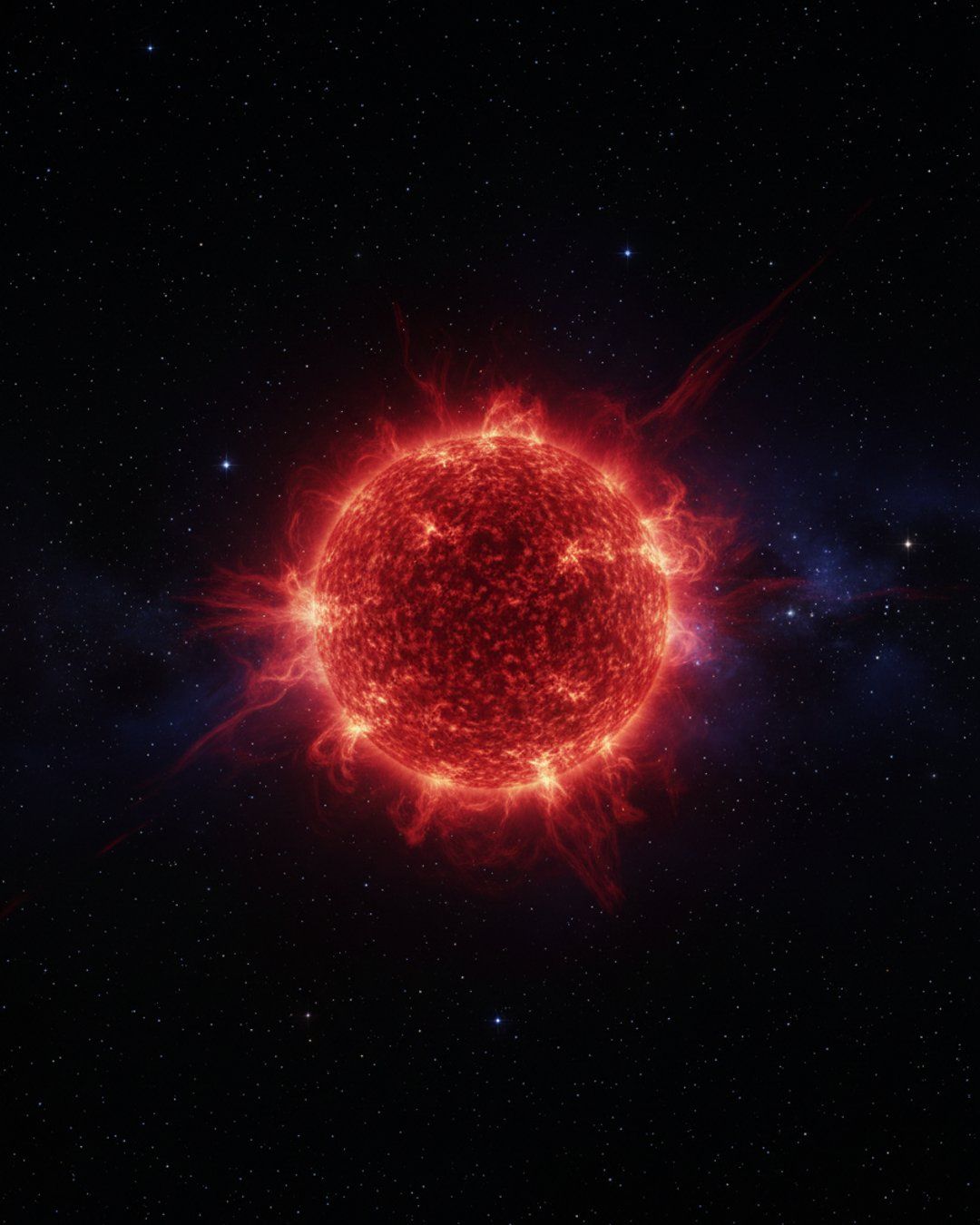
White dwarfs are created when stars like our sun run out of fuel and expand into massive red giants before shedding their outer layers. In a system as tight as Welopō'ai, this expansion should have destroyed the neighboring red dwarf or thrown it out of orbit. Instead, the red dwarf remains in a perfectly stable position.
The proximity of the system allows for incredibly precise measurements. Scientists found the red dwarf has about 42% of the sun's mass, while the primary white dwarf holds about 62%. By studying the gravitational dance between these three objects, astronomers hope to rewrite our understanding of how multiple-star systems live and die.
The team plans to continue observations using telescopes in Hawaii to unravel the history of this cosmic family. As one researcher noted, the discovery serves as a reminder that even our closest cosmic neighbors still hold remarkable surprises that challenge current scientific models.
Source: Space ↗
Illustration: AI-generated




Comments