Skip to content
TimesJetHomeExploreNotificationsSavedProfileYou
Reading as a guestSaves stay on this device. Sign in to like, comment and follow topics.
Ask AI about today's news

Latest

1MST3K revives the legendary 'Turkey Day' marathon for 2026Games2Suzlon and Persistent Systems hit by separate cyberattacksBusiness3Michelle Yeoh leads Blade Runner's 2099 cyberpunk returnSpace4West Bengal seeks a new name to honor its 1947 partition historyTrending5Scotland's £19 billion food sector faces a freezing crisis over net-zero costsScience

Topics

Tech
Startups
Business
Health
Trending
Space
Science
Games

© 2026 TimesJet

Skip to content
#physics
#

#physics

4 stories

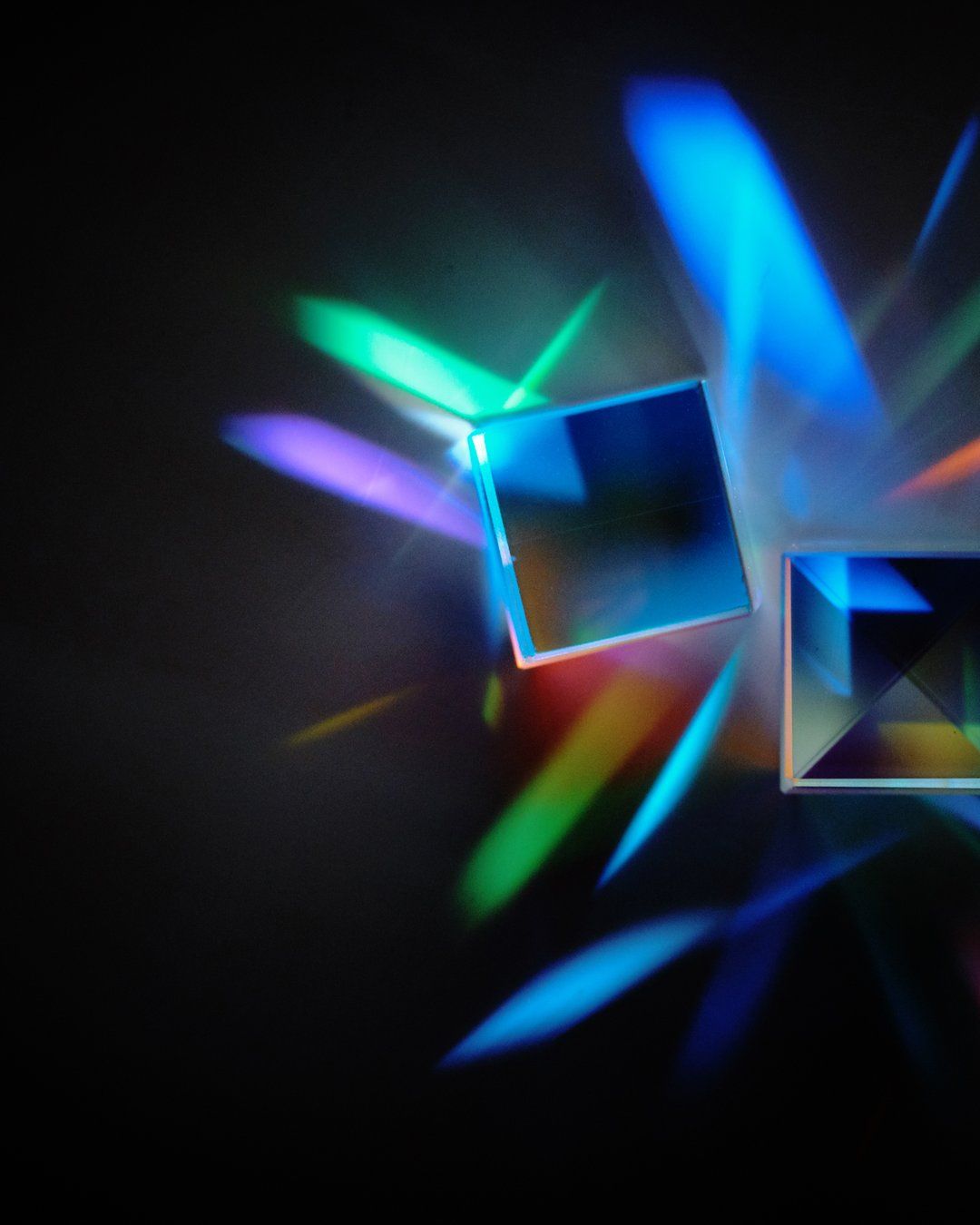
A beam of light shifting colors as it passes through a clear prism.

UT Austin engineers find a way to make quantum computers 7 times faster

Engineers at UT Austin developed a tool that converts light colors to process quantum information seven times faster than previous methods.

Science · Nov 241/6
How it works

Computing beyond the binary

Traditional computers rely on bits that are either 0 or 1. Quantum computers use "qubits," which exploit physics concepts like superposition to perform many calculations at once.

To move this data, scientists use photons. Controlling how these light particles behave is the key to making machines even more powerful.

Science · Nov 242/6

Quantum wells change the color

The research team stacked ultrathin layers of semiconductor materials to create "asymmetric coupled quantum wells."

Science · Nov 243/6
Material science

Tuning light to fit the task

While light moves at a constant speed in a vacuum, different materials change its speed and wavelength. By adjusting the thickness and qualities of these semiconductor layers, researchers can "tune" the light to suit specific processing needs.

This precision allows for more complex calculations without increasing the time required.

Science · Nov 244/6

Shrinking the future of tech

Harnessing light doesn't just increase speed; it also allows for smaller device sizes.

Science · Nov 245/6
The team

A massive joint effort

  • Led by the Cockrell School of Engineering at UT Austin
  • Involved collaboration with 7 other institutions
  • Findings published in the journal Optica
  • Proven 7 times more effective than existing light-conversion tools
Science · Nov 246/6

You've read all 6 cards

The full story has more

UT Austin engineers find a way to make quantum computers 7 times faster

  • The complete story, start to finish
  • 1 link to go deeper
  • Comments and what to read next
Read the full story
Science · Nov 24

NASA experts reveal the wild physics of playing sports in space

In microgravity, every movement causes an equal reaction, making it nearly impossible to stop or pivot without hitting a wall.

Space · Nov 231/7
YouTube · NASA Video
Space · Nov 232/7

Balls fly in straight lines

On Earth, we use gravity to calculate the arc of a throw.

Space · Nov 233/7
3D arenas

The playing field has no floor

Future space stadiums will likely be cubes or spheres where players use all six surfaces to push off and navigate.

Space · Nov 234/7

Hollywood makes it look easy

**Spinning**: Movies show heroes flipping gracefully, but real astronauts often enter uncontrollable, clumsy spins when they twist.

Space · Nov 235/7
New leagues

Governing the first space games

The Space Games Federation has already formed to create official rules for competitive sports played in microgravity.

Space · Nov 236/7
Early tests

Astronauts try space soccer

Crew members on the International Space Station have already experimented with soccer, hockey, and lacrosse.

These tests show that Earth sports don't translate well. Instead, experts suggest new games like magnetic basketball or dodgeball using elastic tethers to help players control their flight and avoid crashing.

Space · Nov 237/7

You've read all 7 cards

The full story has more

NASA experts reveal the wild physics of playing sports in space

  • The complete story, start to finish
  • 1 link to go deeper
  • Comments and what to read next
Read the full story
Space · Nov 23

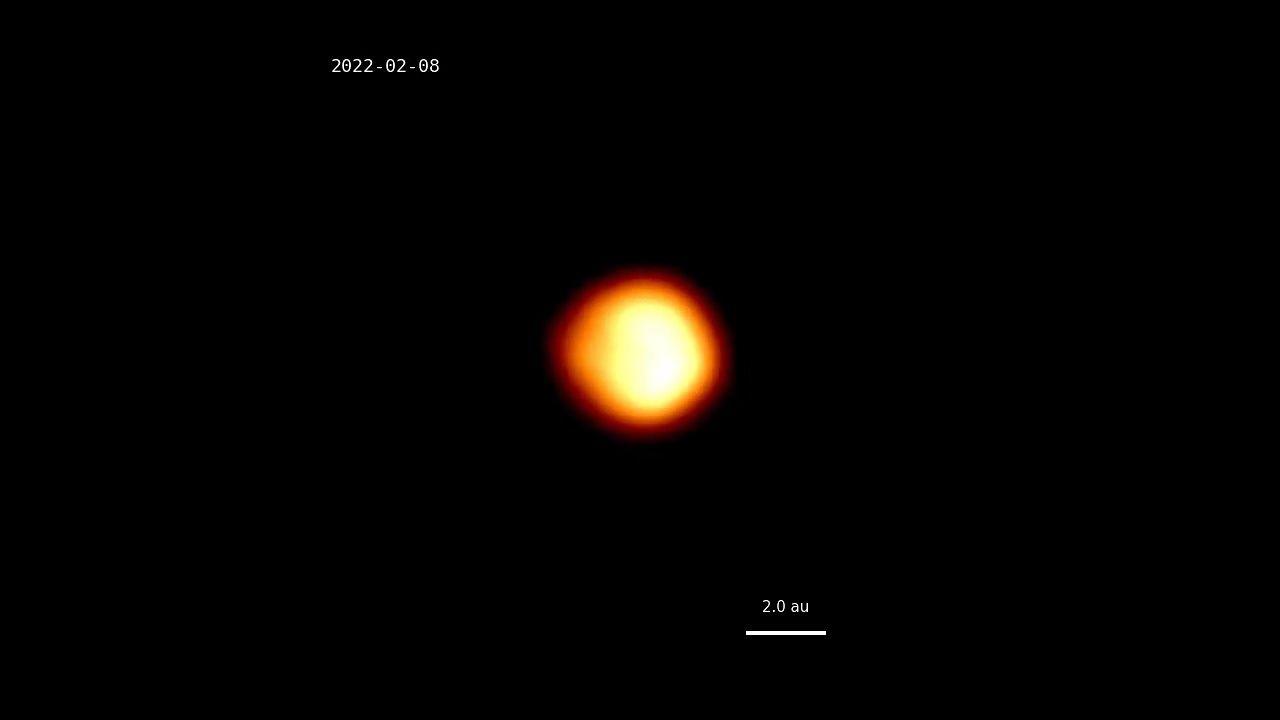
A giant star's magnetic eruption reveals the secret origin of our atoms

Astronomers captured a massive eruption from the red giant Mira that is reshaping our understanding of how galaxies grow.

Science · Nov 231/7
YouTube · Onsala rymdobservatorium
Science · Nov 232/7

Magnetism powers the cosmos

For years, scientists believed starlight pushed dust out of old stars to seed the universe with new elements.

Science · Nov 233/7
Giant loops

Gases reach past Saturn

A single magnetic flare on Mira's surface created a loop of gas stretching as far as Saturn is from our sun.

Science · Nov 234/7

Spreading the seeds of life

Stars like Mira produce the carbon, oxygen, and nitrogen found in our bodies.

Science · Nov 235/7
Solar future

A preview of our own sun

Mira is a preview of our sun's future, showing how it will eventually grow cooler and windier in a few billion years.

Science · Nov 236/7
Big shift

Rewriting the history of Earth

The discovery suggests that Earth might not exist without ancient magnetic storms on distant red giants. Researchers say we must now factor these magnetic forces into the entire "galaxy ecosystem" to understand how solar systems like ours were first built.

Science · Nov 237/7

You've read all 7 cards

The full story has more

A giant star's magnetic eruption reveals the secret origin of our atoms

  • The complete story, start to finish
  • 1 link to go deeper
  • Comments and what to read next
Read the full story
Science · Nov 23

Astronomers find a 'system that should not exist' just 28 light-years away

Located just 28 light-years from Earth, Welopō'ai contains two white dwarfs and a red dwarf in a configuration that scientists cannot yet explain.

Space · Nov 231/5
Accidental find

A search for planets went sideways

Researchers at the Université de Montréal were using the SPIRou instrument in Hawaii to hunt for exoplanets around a dim red dwarf.

Instead of a planet, they found a massive gravitational wobble moving at 10 miles per second. The source was a hidden, dead star.

Space · Nov 232/5

Two white dwarfs and one survivor

The system features two white dwarfs—the dense remnants of sun-like stars—and a single red dwarf that continues to burn.

Space · Nov 233/5
Scientific puzzle

The math behind their survival

  • Red dwarf mass: 42% of our sun
  • Inner white dwarf: 62% of our sun's mass
  • Orbital distance: 4.6 astronomical units

When a star becomes a white dwarf, it first expands into a red giant. This process should have swallowed or destabilized the nearby red dwarf, yet it remains in a stable orbit.

Space · Nov 234/5

Testing the limits of physics

Researchers will use the system to study electron degeneracy pressure and how stars evolve in tight groups.

Space · Nov 235/5

You've read all 5 cards

The full story has more

Astronomers find a 'system that should not exist' just 28 light-years away

  • The complete story, start to finish
  • 1 link to go deeper
  • Comments and what to read next
Read the full story
Space · Nov 23

That's everything for now

New stories arrive throughout the day.
TimesJetHomeExploreNotificationsSavedProfileYou
Reading as a guestSaves stay on this device. Sign in to like, comment and follow topics.