
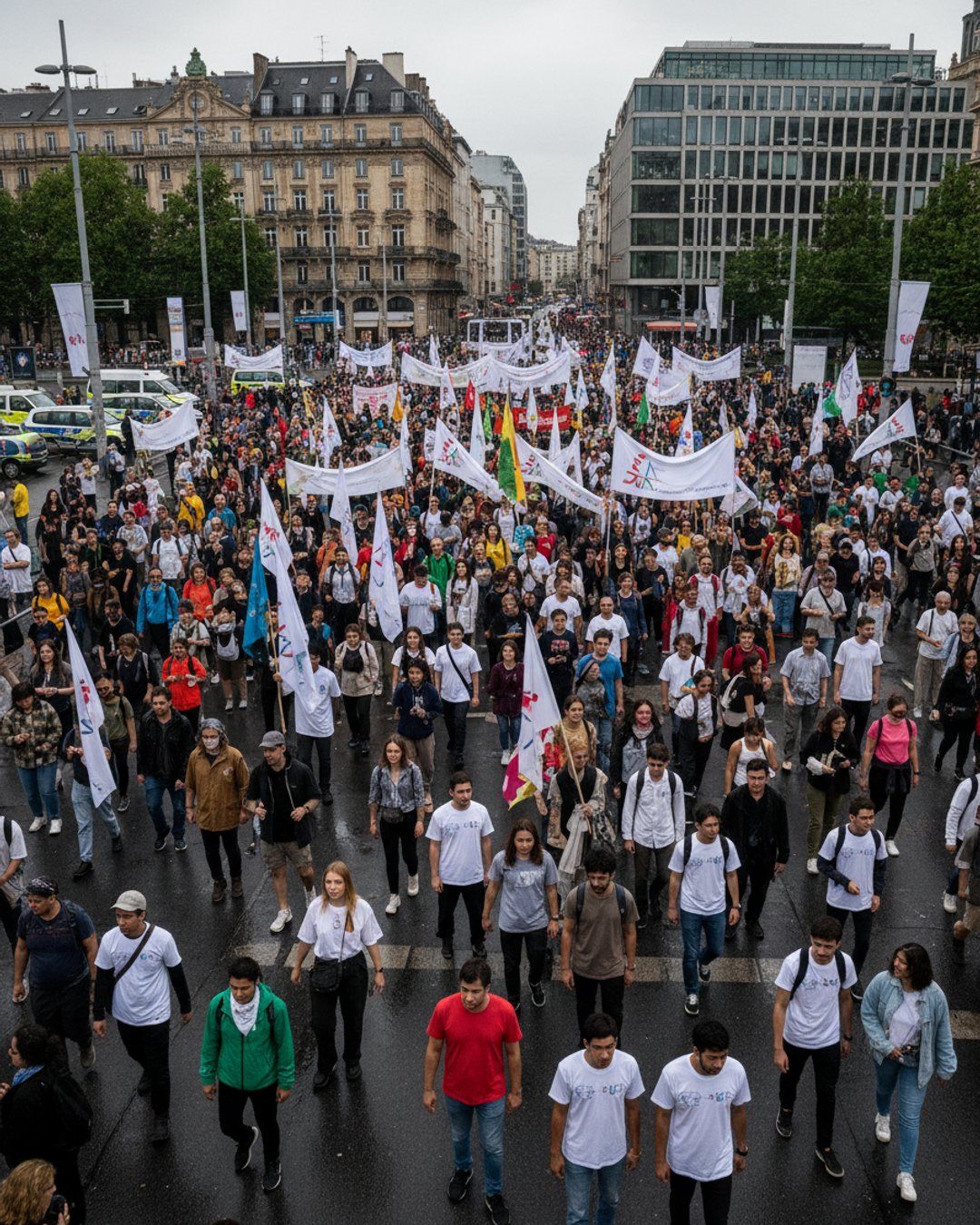
A wave of public protests across Australia cut sexual assault cases by 21%
- Protests reduce sexual violence
- Assaults fell by up to 21%
- Local attitudes shifted for men
The story
Protests reduce sexual violence
Research into Australia’s 2021 rallies shows that public demonstrations can drive a measurable drop in local sexual assault rates.
Assaults fell by up to 21%
A study led by Curtin University analyzed the aftermath of the March 4 Justice rallies, where 110,000 people protested. Areas that hosted these events saw a 16% to 21% reduction in recorded sexual assaults over the following year. This represents roughly 5,300 fewer assaults than expected.
Local attitudes shifted for men
Men living in areas with rallies became more likely to believe survivors and less likely to blame victims.
Saving billions in social costs
The reduction in violence carries a significant financial benefit. Researchers estimate that preventing these 5,300 assaults resulted in a social saving of approximately $1.2 billion. This figure is based on the standard lifetime costs associated with the trauma and recovery of victims.
Changes are not permanent
The study found that the positive shifts in community attitudes and safety began to weaken over time.
Long-term commitment needed
While the 2021 demonstrations were powerful, the effects were not guaranteed to last. Researchers emphasize that a single day of action is not enough. Sustained efforts from governments and individuals are required to maintain lower violence levels and keep community attitudes from sliding back.
New research suggests that public protests can achieve more than just raising awareness—they can actively reduce the prevalence of sexual violence. A study led by Curtin University focused on Australia’s March 4 Justice rallies in 2021, which saw 110,000 people take to the streets. The data revealed that regions hosting these rallies experienced a 16% to 21% drop in sexual assaults over the next 6 to 12 months.
The impact was not just a matter of police statistics. The study estimated that approximately 5,300 assaults were prevented, including those that typically go unreported. This reduction saved society an estimated $1.2 billion in lifetime costs associated with victim care and legal processes.

The protests also appeared to change how men in those communities viewed the issue. Surveys indicated that men in rally areas were more likely to believe survivors and less likely to dismiss or blame them. However, researchers noted that these changes were not permanent and began to fade over time.
To keep violence rates low, experts say a single day of mobilization is not enough. Ongoing commitment from both the government and the community is necessary to ensure that the shifts in attitude and behavior become a lasting part of society.

Source: Phys.org ↗
Illustration: AI-generated
Links in this story

How does this story make you feel?
Read next
 ScienceScotland's £19 billion food sector faces a freezing crisis over net-zero costs
 ScienceUT Austin engineers find a way to make quantum computers 7 times faster
 ScienceTobacco plants could slash the price of life-saving cancer drugs
 ScienceKilauea lava fountains shoot 650 feet high in overnight Hawaii eruption
Comments